Showing posts with label illustrator. Show all posts

Friday, December 13, 2019

Oh, You Make Children’s Books?: How to Answer Those Questions About Kid Lit from the Fam


As a children's author, I hear this all the time, but more frequently around the holidays and especially from family members. Writers and artists get asked this question and more and we aren’t sure how to respond. So, here are some of the scenarios we kid lit artists get and the potential responses you can use.

  • Don’t you want to write “real” books?

I get this more from self-proclaimed non-readers, which is odd in itself. But my typical responses are:

SHOCK FACTOR
“Gosh no! Why would I want to do that?” – this is followed by a look of horror, as though they’ve asked me to skydive into an active volcano while blindfolded.

SWEET AND HONEST
“I love kid’s books and nothing else could make me happier.” – Big smile, even when they obviously don’t get it.

SORRY MY MOUTH IS FULL, SO I CAN’T SPEAK
“Mrph mble flrp…” - Pumpkin pie or hors d’oeuvres are great tools.
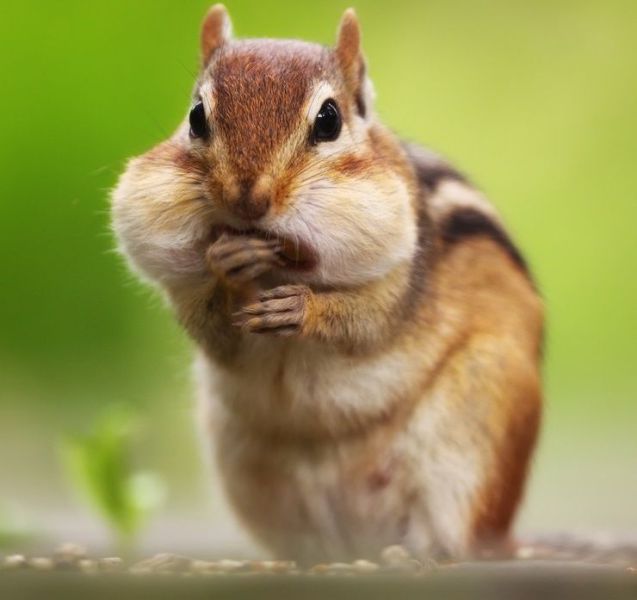


  • Oh, I’ve always wanted to write a picture book. Do you think we could collaborate/you could be my illustrator?
Obviously, I’m only an author, but I bet illustrators get this even more than authors. Possible responses:

SHOCK FACTOR
“Here are my fees (Illustor’s) and did you know a picture book can take two years MINIMUM to produce? Also, I have about five WIPs right now and have no time.”

SWEET AND HONEST
“I started out with just an idea too. You should write your story and if you are serious about traditional publishing, look into the SCBWI. I have too much going on currently to collaborate but I’m happy to point you to some great blogs/conferences/craft books you may like.”

*Here is where you see if they are truly interested in a long game or just ‘always thought it would be fun/easy.’*

SORRY MY MOUTH IS FULL, SO I CAN’T SPEAK
“Hmrph bing mblp…” - That extra roll was just calling my name…


  • Why don’t you just self-publish? You could have your book out in a few hours.
I don’t think people realize that it isn’t quite as easy as they believe to self-publish picture books. Possible responses:

SHOCK FACTOR
“You know when you self-publish, and do it well, you have to hire and pay an illustrator (if you are the author only), be the final editor or hire an editor, be your own sales person, marketer, art director, warehouse, distributor and it will be exponentially harder to get your books into chain stores and even indie stores still have to know you exist in order to buy your book. This takes a ton of time away from my creative time.”
-        At this point most people have stopped listening. But self-publishing, especially for picture books that need quality art, is WORK and it isn’t for everyone.

SWEET AND HONEST
“I never wanted the sole responsibility of wearing all the hats a self-published author must wear. Plus, I was always scared that maybe my writing wasn’t as good as I thought it was. By getting through the many, many obstacles in traditional publishing, and working with professionals along the way, I know my work will be the best it can be.”
-        Again, sometimes they stop listening. Not everyone gets my passion for kid lit. And that is OKAY. I don’t always get their passion for cross stitch, hockey, that popular tv show they keep talking about.

SORRY MY MOUTH IS FULL, SO I CAN’T SPEAK
“Worlm rmbl brmpth…” - This method may lead to a shocking belly ache. But those cookies were worth it…


  • So, you sold a picture book. When are you going to quit your day job?
The only response:

“HAHAHAHAHAHAHHAHAHA….*BIG BREATH* AHHAHAHAHAHAHHAHA! Oh, oh wait. You were serious?”

It is okay to be awkward and not sure how to answer. Some people are easy to talk to while others make you feel like you are under a spotlight.

Many of us artists are introverts and don’t want to talk about ourselves and our art. Others wave their nerd flag proudly.

Even if you don’t have a book out yet, if you want to talk about your art, your path, and your struggles, then go for it. If you want to avoid it, then play with the dog/cat/baby so you have an excuse for being distracted while others bombard each other with questions.

You can always offer to wash the dishes when you need to run away. Most relatives won’t follow.

Any other great responses to common questions?  Please keep if PG. We write for kids, you know.


Tuesday, May 14, 2019

Interview with Illustrator Claire Sedovic

Today we welcome illustrator Claire Sedovic. She is the amazing artist who brought the Odd Animal ABC's to life.  Thank you for joining us today. So, inquiring minds want to know...

How did you become the illustrator for Odd Animal ABC’s?

After quitting my job as a graphic designer for a major media company last spring, I began sending postcards featuring my art to potential publishers. Blue Manatee Press was one such publisher whose work I admired, so of course they received a postcard from me. A couple of months later I heard from Amy Dean (Editorial & Marketing Director at Blue Manatee Press) that she was looking for an illustrator for a manuscript she had just acquired and wanted to know if I would like to submit my work for consideration. Of course I said yes, and almost exactly a year later, Odd Animal ABC’s was published featuring my art!


I feel very lucky that Blue Manatee had that postcard! Have you always wanted to illustrate?

Indeed I have. As a child I often wrote and illustrated sequels to my favorite picture books or crafted my own original stories complete with detailed illustrations in marker or paint.

Can you describe your process of taking this story text and developing it. 

I must say I feel very fortunate that you and I were able to correspond as often as we did while I developed the illustrations for the text as I realize now that is not typical of the author/illustrator relationship. I think our collaboration succeeded because I was receptive to the illustration notes you offered, and you were willing to change the text in some instances that I interpreted it a little differently with my illustrations than you expected. As an illustrator, I see my role as someone who can visually fill the gaps in the story. And because this story text is all dialogue (and a lot of humor!) I felt like I had a lot of room to play. 

I started the process by reading the text over and over to get a good feel for the story. I then created thumbnail sketches to determine the flow and layout of the book. Once those sketches were approved I proceeded with the full scale art, but even then, I continued to make adjustments as the story evolved and I received feedback from you and Amy.

I've told lots of people how you helped shape this into a better book. Without some of your requests due to art, I wouldn't have my two favorite jokes in there! 

So there are 53 real animals (and one imaginary unicorn) in this book. Was the large cast of characters a problem?

I wouldn’t say the large cast was a problem, but it was certainly a challenge. I loved researching the different animals to ensure that I drew them accurately, but it took some time to figure out when and were certain animals should reappear in order to drive the narrative along. In some cases, this was already written into the text, but throughout the illustration process I took some liberties to add or omit for visual appeal and to help integrate the ABC letters into the illustrations.

I love the coloring of the letters themselves too. So what do you hope readers take away from this story?

I hope that the book widens kids’ understanding of just how diverse the animal kingdom really is. Of course I hope they laugh along with all the wonderful, and often weird critters as they travel from A to Z, but on a deeper level, I also hope that it sparks new curiosity about the natural world and a desire preserve and protect it for future generations.

That was my hope too. Now, a very important question,
 what is your favorite chocolate or dessert?

How about chocolate dessert?

Where else can readers find you and your art?


You can find more of my work on my website (clairesedovic.com) and follow me on Instagram @clairesedovic.


Wish you were on Twitter more. You are missing some major book love!  Thank you so much for giving life to these odd and amazing animals and for joining us on the blog. Best wishes that your illustrating career is long, prosperous, and full of happy readers!!


Friday, May 3, 2019

So You Have a Book Coming Out: Part Four: Taxes and Deductions

Upfront Disclaimer: I'm not a tax pro or lawyer or anything other than a writer trying to stay organized. This way, I have the information to give to my tax professional.

You, as a published author or illustrator, are now a business. That means there is some not-so-fun things we have to deal with so we can keep writing and creating.

Taxes.

Let's face it. Laws change, the forms are about a million words long, and who knows what we may be missing if you don't have a certified accountant in the family.


I have a certified public accountant. I think they are worth the money, not only for the time it saves me, but the relief from stress and anxiety I have that I may mess something up and having the IRS show up Men In Black style.

+
Whether you are a do-it-yourself-er, or you use a pro, you need to be organized all year long. Not just those first two weeks of April.

You don't need a fancy or expensive program. I use excel.

First: Do you have a home office that is solely used for your business as a writer or illustrator?
If so, this may be tax deductible. That means this little piece of creative heaven may save you a bit on your dues to Uncle Sam. But you have to keep track of some things:

  • Your home's TOTAL square footage and the OFFICE square footage. 
  • Electric Bill
  • Internet Bill
  • Gas Bill
  • Phone Bill

Then a percentage of you home's bills are what is actually deductible, based on how much space it takes. You have to have the totals for each month. It is easier to keep track of this monthly, rather than digging through old bills, or hunting for your gas company user name and password right before the tax deadline.


You can also deduct business related expenses. Keep ALL receipts and label and organize them. If you get audited, you want everything available and easy to find. I'm talking file folders or binders as opposed to shoe boxes.


Items to track for possible deductions:

  • Copies of your books for sales, promotional giveaways, and donations
  • Mileage for School Visits 
  • Food and Hotels for out of town School Visits or Presentations
  • Writer or Illustrator Organization Annual Dues (i.e. SCBWI)
  • Classes for continuing your education
  • Promotional materials (stickers, bookmarks, pins)
  • Website fees
  • Author/Illustrator Professional Photos (again, falls under promotional materials)
  • Office Supplies
  • Art Supplies (for illustrators)
  • Necessary Office Equipment: Computer- yes! That mini golf putter thing and fancy espresso maker-no!
  • Donations (if you donate a copy of your book, track what you pay, not the retail value.)


There is probably more that I haven't thought of, but hey, I'm new at this.

I keep everything in an excel spreadsheet in summary as well as a sheet for all I am paid:

  • Advances
  • School Visit Fees
  • Speaking Engagements
  • Royalties


Again, this is NOT a comprehensive guide. This is just stuff I've figured out on my own this year as a debut author. If you have any questions about your specific circumstances, I recommend finding a local tax pro. Preferably before next April.

So get organized and then get back to writing.


Sunday, September 18, 2016

Concept to Completion: Illustrator


Welcome to Reading, Writing, and Reaching for Chocolate. The next stop on the road from concept to completion of a picture book is the Illustrator. Today we have an interview with Vanessa Brantley Newton, Illustrator of My Three Best Friends and Me, Zulay, The Hula Hoopin’ Queen, and (one of my personal favorites-literally made me tear up) Sewing Stories. Her most recent illustrations can be seen in Mary Had a Little Glam.


Thank you for joining me Vanessa. So let’s start at the beginning. What happens when you get a call from an art director?

I really love to hear from my art directors, but of late some of them I only get to talk to once or twice on the phone and sometimes not at all.

I prefer a phone call instead of emails. Email sometimes can come across as cold to me. I like to hear the excitement in an art director's or editor's voice. It helps me to understand what they are looking for as well. I like to start all of my projects off with a kick off call. Just to get a feel for who I am going to be working with, what they expect of me and what I in turn want to express through my work.

So when I get a call from art director, they basically tell me what the size or specs of the project are. I am asked if I have any idea of how I will approach the work. If it will be live work (meaning traditional paint, paper, collage) or will it be digital files. We talk about building characters for the stories and if it's historically based, they will sometimes send references and information they have collected to help in the process. Sometimes all I get it the spec of the project and they leave me to created sketches and then after the first round of sketches they will tell me what they would like to see changed and if the author has anything suggestions they include those as well.

 Do you communicate with the art director, the editor, or both?

So, some Publishing houses don't have art directors and it's all left to the editor. I get to work with both and sometimes just one or the other.

What is your process when getting started with a new manuscript? 

I am dyslexic and so it takes a while for me to get through the simplest of stories. I read them to myself and then I have my husband or daughter or someone read it out loud to me so I can picture it in my head. Hearing it read out loud is super important for me. It helps me to grasp the story and the characters or character in the story and what the story feels like.


That’s amazing, and wonderful that your family helps! I like to hear my words aloud by others too, to get a sense of flow.

So once you get the go-ahead from the art director what is your final process?

Every time I start a picture book or middle grade reader, it's like doing it over the first time every single time for me. Some illustrators don't have that situation. I do.  I have been at this for years now and still it's like the very first time every single time LOL!

I usually take a week to just think of how I want to approach the book. During that week, I start to birth the characters. I look through magazines and photos. I visit Pinterest and look at children. I go to Barnes and Noble and watch the children. Collecting information and references all the while. I am a people watcher and this helps me greatly in my illustration work.


Then I starting working out the story and story boarding and doing some rough sketches and then they are sent to the publisher and then they will send them back in a few weeks and then there is usually a second round of sketches and then when approved I take it all to finish. Even after they are all finished and colored and collaged, there is still the process of looking them over and finding anything that isn't working or needs to be adjusted.

When everything has been fixed and adjusted it goes to print for proofing and then F&G's* are sent to me and the author to see what the first print looks like. Before you know it, a box of book are sitting at your doorstep. LOL!!

(Note for newbie’s to the industry-or oldies who don’t do acronyms: F&G means a folded and gathered or an unbound book. This gives those working on the book the first glimpse of what the finished product can be. This is the last chance to catch changes that need to be made before final printing.)

What is your favorite part of the process?

I am just starting to embrace and like the process of sketching, but my favorite part of all is actually creating the character and then creating the finishes! So I have two parts that I love.


As an author-only, I am so jealous of the creation of the character. I’m can’t wait to see what my characters look like ‘in person.’  What is the longest and shortest time you’ve worked on a manuscript?

3 months and 3-4 years.


Do you deal with any other people within the publishing house? If so, who? 

Sometimes when they are wanting to promote the book I will hear from a publicist for the publisher and they will tell me what they have in mind to move the book. Such as book festivals, book signings and other events.
 

Is there anything you wish authors knew that would make your job easier?

That illustration is a whole other ball of wax. Some illustrators don't like artist notes, but then there are some of us that do. I am one of those Illustrators that do. It's when they begin to interfere with the process that it becomes a problem. I have only had two of those situations. One was with a publisher and another with a self-published job. Nearly drove me crazy LOL! Mostly it's a process and sometimes it goes rather quickly and then sometimes it takes a whole lot longer.

Any advice for aspiring illustrators?

Hone your gift! Draw everything and every day. Try different art supplies. The ones that go together and the ones that don't. Be brave and break the rules and see what comes from it. You may surprise yourself and others too.  When building a portfolio only put the things that you are proud of in there. Don't put half done work in there when you are looking for work. They only want to see what puts a smile on your face and what you are most proud of.

When trying to get a job in children's pub please put children into your folio. Children, moving, dancing, bouncing, singing, being kind or being rambunctious! Create characters that speak to the audience. Give them personality by giving them names and places that they come from and remember there is never any competition unless you invite it in. Nobody can do what you do. Your style is your style and nobody can bring to the creative table what only you can bring so develop your style and then hone it.

What fuels your creative time? Chocolate, coffee, music?

Music, music and music. Oh my goodness I can't go a day without music. I listen to a lot of happy music as to why my illustrations are often happy ones. R and B, Hip Hop or conscious music, gospel, classical, meditative. It creates an atmosphere for me to work in. Music is like paint to me. I have different paints for different illustrations and the same goes for my music.

What wonderful advice and insights. Thank you again for coming out to the blog, Vanessa. I can’t wait to see what you draw up next.


Sunday, September 11, 2016

Concept to Completion: Art Director Jim Hoover


Next on our journey following a picture book from concept to completion is the art director.


Joining us today is Jim Hoover with Viking Books. Jim, thank you so much for being willing to be a part of this series.  

Let’s start at the beginning. What happens when you get a call from, or have a meeting with, an editor?

I have worked with my team of editors for many years now, and I am proud to call them my coworkers, colleagues, and friends. So—often, a meeting isn’t so much ‘called’ as it sort of morphs from a casual conversation where we turn from shooting the breeze to “oh, you actually wanted to talk about work. Cool.”

Other times, someone shows up at your door with a stack of printouts or proofs, and it’s like “hey. What did we decide to do about this?”

“I dunno.”

“Okay, let’s figure it out.”

I truly think the world of my team and enjoy their company. We love our work, and it is completely collaborative. I always say that the fun and love we have for our books shows through in the final package.  We work hard, but most of the good days we barely notice.

And like any relationship, communication is key. If some snafu happens along the way during the process of a book it almost always boils down to miscommunication.


Above is a picture of me holding court with some of my coworker peeps. This is a picture from a very important meeting where we discussed the end of the last Game of Thrones season. I’m sure we did real work that day, too. To my right: Maggie Rosenthal (editorial assistant), Abigail Powers (copyeditor), Mariam Quraishi (design assistant), Amanda Mustafic (associate publicist), Krista Ahlberg (copyeditor), Nancy Brennan (associate art director), and Kate Renenr (senior designer.)


Sounds like a wonderful way to work. When working on a picture book do you communicate with the illustrator, the editor, or both?

With both. An art director’s job is to mediate comments from the editorial, sales and marketing teams to the illustrator and keep them on task and on time. We usually have a few ideas of our own, too.

What is your process when getting started with a new manuscript?

It actually still can surprise me after fifteen years how much the process can shift from one book to another. But GENERALLY, when I get a manuscript and need to find an illustrator, I have a few sources that I start with.

1.) I have a running list of illustrators that I have either always wanted to work with or am dying to work with again. Sometimes, it can take YEARS to find just the right (or another) book to work on. Patience is a virtue on all sides.

2.) I have a number of illustration agencies that I have worked with and trust. (I also have agents that I avoid like the plague.) I will go through their sites and (re)familiarize myself with their clients, and in many cases, reach out and ask for recommendations.

3.) I’ve usually found someone by this point, but every now and then, I’ll talk to other art directors and we will recommend folks to each other. Again, we also all have a running list of whom to avoid.

I’ll try to stay off the list of people to avoid. :-) Easy since I’m not an illustrator. What is your favorite part of the process?

Oooo, tough one. My favorite part of the process is probably when I get a few hours to sit with some good tunes on and just play with type and color. There is this wonderful ‘quiet before the storm’ moment when you are onto an idea for a cover or something when the whole thing is just YOURS to develop and work with, before anyone has weighed in on if it works, or needs to change, or just pulls the whole thing apart and sends you back to the drawing board.

I’ve lost days chasing an idea that I am pretty sure won’t make it past the first round of feedback, but I just want to let it breathe for a bit and enjoy it. Sometimes you can push through and really find something that’s special.

That sounds fantastic. I’m really seeing that every person on the path for a picture book is wildly creative. So when is your job finally ‘done’?

I guess when the book finally comes in from production as a finished, printed, bound object—that book is done. Otherwise, I am Sisyphus pushing that big ol’ boulder up the hill.


I think it’s like that at every phase. There is always ‘one more thing’ we can do, or tweak, or change. Now my favorite question; what is the longest and shortest time you’ve worked on a manuscript?

This really varies in an old skool hardcover imprint like Viking. We seldom push something through too fast. I would say the shortest has been five or six months.  On the flipside of that, I have one project that I have been working on for three years and it’s STILL not done. I know editors closing in on FIVE YEARS with some manuscripts. Some books just need more room to develop and grow than others. One of my favorite author/illustrators once lamented that she wishes she could do one picture book a year, and it usually takes her a year and a half, and occasionally two. But her books are perfect and beautiful. I am a quality over quantity sort of guy.

Six month to 5 years. That's a pretty big range. Publishing = Patience.
Do you deal with any other people within the publishing house? If so, who?

Publishing is a team effort. We work with marketing, sales, publicity, upper management, sales reps out in the field, authors, estates, stock houses, foundations, sometimes even spouses. It takes a village to raise a child and a House to make a book.

It takes a village to raise a child and a House to make a book.


Best. Line. EVER.

Every author needs to know, are illustration notes evil? This is something we hear conflicting info on.

Here’s what authors need to know about working with illustrators on a picture book. Once an illustrator has been assigned, you both become COAUTHORS. They are going to bring something to the table that you could not have counted on. Illustrators turn word documents into living, breathing things.

So, as you write, breaking a story down by spread is a great idea (I do know some art directors and editors that disagree with me here) but breaking down a manuscript by spread allows you to control the pacing of a story. There are some broad illustration notes that may be necessary, but beyond these two things, it really is best to keep illustration notes down to a minimum. This is not something that should be micromanaged, and it could even work against you in finding an editor.

Is there anything you wish authors knew that would make your job easier?

The biggest frustration is when an author doesn’t understand that once a publisher is signed up, their book is no longer their own thing existing in a vacuum. We have teams of people with decades of experience and direct knowledge of what will do well out in the market and what won’t. Have faith in the team that has faith in your book.

Have faith in the team that has faith in your book.


No I in team. Check.

Is there anything you wish illustrators knew that would make your job easier?

Deadlines are SO important. There is always a few days or even a week or two grace period, but some illustrators will blow deadlines by MONTHS. Understand that you are shooting yourself and the book in the foot the further away you get from an agreed-upon deadline.

*Double checks calendar to see if I’m late for anything.*  No, I’m safe for now. What fuels your creative time? Chocolate, coffee, music?

Are you a mind reader? :o) This is the holy trinity of my creative fuel. Sometimes I get caught dancing in my chair while making boring corrections to a novel interior, and I keep a chocolate stash in my top drawer, but shhh! Don’t tell anyone! 

Shh. Don’t blow my mind reading secret.  And thank you for that image. Now I’m going to imagine everyone chair dancing as they work on their books. :-P

Thank you again Jim for sharing your part in the publishing journey. Thank you for what you do! And P.S. I’m totally snagging some chocolate if I ever come visit your office.

For you readers who want to know more about Viking follow them on Twitter at: https://twitter.com/VikingChildrens

Or find them on the web at: penguinrandomhouse.com
and

Sunday, August 7, 2016

From Concept to Completion: How Many Hands Touch a Picture Book on the Publishing Journey?


When publishing traditionally, just what goes on getting your picture book out there?


You-Publisher-Consumer

Right?

Not quite.

During a talk with an editor recently, I asked just how many hands are on a picture book from concept and writing to completion and in the hands of the reader.  Here’s what I found out.

·         Author – This is the easy part. The creator of the manuscript. Sometimes this person is also the illustrator, but for this series we are looking at text only manuscripts.

**Hand count: 1**


·         Critique Partners/Beta Readers – Seriously-this should be a step. Find a critique group online or through groups like SCBWI. They can help you find what is working and what is not. They will push you to be a better writer. They will help you know when it is finally time to submit.

**Hand count: approx. 5-10 **


·         Agent – Not always necessary but I feel this is important to open doors and help you get your work extra polished before presenting it too publishers. Plus many publishers are closed to unsolicited submissions so you almost always need an agent to get into these houses.

**Hand count: 6-11**


·         Editor – Your agent, or yourself, will submit to an editor. If they love your story and see promise they will present it to their boss (or acquisitions team).

o   Inside the publishing house now: the Editor’s boss (or acquisitions team) will need to give the thumbs up to acquire the piece.

**Hand count: 7-12**


·         You and Editor – There will be back and forth during the editorial process. This may be a few simple changes and corrections or there may be a number of big changes. Each book is different.


·         Copy Editing –focuses on accuracy, formatting, and proofreading. Line edits people.

**Hand count: 8-13**


·         Design/Art Director – The art director does exactly that. They find and guide the artist in the direction to achieve the right ‘feeling’ for a book. They work with the editor and discuss what illustrators they think are right for the project. They are not just a stop on this chain of hands on you book, but more of a cog that is moving along with many other. They work with the editor, illustrator. Sometimes this is a team and not just an individual.

**Hand count: 9-16**


·         Illustrator – The partner that you may never even meet or talk to. This person will create concept drawings, work with the Design Dept/Art Director. After weeks, months, or occasionally years they will create the art that brings the text to life.

**Hand count: 10-17**


·         Production Editor- Production editors manage the publication. They deal with writers, editors, and vendors to ensure your picture book meet the house’s standards and that everyone meets deadlines. Sometimes these editors also proofread and edit the manuscript and offer feedback to writers and the other editors. (Notice ALL the editing to make sure your picture book is as perfect as can be?)

**Hand count: 11-18**


·         Sales – These are the people actively selling your finished book to vendors. Again not just an individual, but a team.

**Hand count: 12-21**


·         Publicity – These are the folks who create awareness for your book, gaining attention and interest.

**Hand count: 13-24**


·         Marketing – These folks, like with Publicity, create awareness and help sell the book. In some houses the Publicity and Marketing are one in the same.

**Hand count: 14-27**


·         Sub-rights- These are "sub-license" your picture book for various formats and adaptations in addition to the primary format. Additional sales could be film or television rights or translation to another language.

**Hand count: 15-28**


·         Book Sellers and Libraries – Such as Barnes & Noble, Amazon, and Indy Bookstores. The places we know and love.

**Hand count: 20-way too high of a number for me to even guess.**


·         Reader – Finally. This quick and simple process can take around 2 years on average and, depending on the size of the publishing house you are working with, you can easily have up to 20-30 people who have their hands on your precious manuscript to get it out into the world.

Traditional publishing takes a real team to get a book from concept to completion.  Over the next weeks I’m tracking down people in these fields to get interviews so we can see what goes on behind the scenes when making a picture book.


People in the publishing field, let me know if I skipped any jobs.

Please note all of my counts are approximations. These numbers can vary greatly depending on the size of the publishing houses.