Showing posts with label Children's Literature. Show all posts

Saturday, September 5, 2020

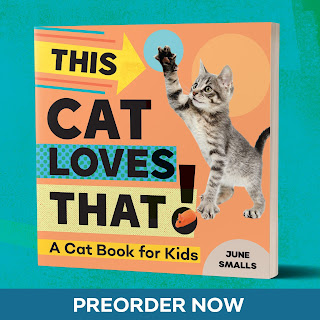
This Author Loves That! : Marketing a Picture Book


 When I first started thinking of writing as a profession, I was unaware how many hats we have to wear. We write, sure. But then we edit, critique, cheerlead, market, sell, teach, and more I can't even think of now.


With my latest picture book, This Cat Loves That! : A Cat Book for Kids, I stepped out of my comfort zone and rhymed and had to work my text around photos rather than having illustrations work around my text. 

This book is geared for preschoolers and young readers. It is full of sight words and cute cats. The best part; when thinking of how to market this book I thought of cats of course!


A fun photo shoot with a local shelter gave me tons of laughs as this little tabby with the cute boots loved riding on my shoulders (I should have gotten a photo of that!) and my shoelaces were attacked frequently by a speedy grey. An older black cat happily followed the kittens and looked for chin scratches as I shot a laser pointer at my book repeatedly.


The great part is cats are curious. All I had to do was set the book down and they all came to sniff, bat, and bite this new toy.


There were so many sweet and affectionate cats it was hard not to bring one home. Though I don't think my cranky old tuxedo cat would have appreciated it very much. At nearly twenty we let him rule the roost.


If you are a writer or illustrator, teacher or librarian, it is great fun to find the subjects of your books in real life if you are able. They really bring the books to life, especially for the readers who are more visual learners. You may realize that you love marketing and photography too.

So enjoy these cute kittens and if you are interested in this fun cat book click here. If you are thinking about a way to help out your community and local animals, please check out your local shelter, SPCA, or rescue groups. A simple donation of trash bags, cat litter, cleaning products, toys made by the kids, and food are a small way you can make a big difference. Who knows, you may even find a furry new family member.


Put cute cats to the test and find out what they love best!―an early-learning book for toddlers and preschoolers

If you’ve been looking for cat books for kids, you’ll love This Cat Loves That!, a fun rhyming story filled with tons of cute and colorful cat photos that will help your little one learn about their feline friends. Your child will delight in discovering what cats love, as well as some stuff they don’t. Of all the cat books for kids, this one is the purr-fect introduction to one of their favorite animals!

This standout among cat books for kids includes:

  • Photos of different cat breeds and ages
  • A narrative designed to engage toddlers and pre-K kids
  • Basic fun facts about cats

When it comes to cat books for kids, this one is the cat’s pajamas!


Tuesday, April 23, 2019

Author Interview with Giveaway: Gayle Krause


Today we have picture book author Gayle Krause here to tell us about her new book, Daddy Can You See the Moon. Gayle has also been kind enough to offer a picture book critique to one lucky reader.  

Thank you, Gayle, for joining me on Reading, Writing, and Reaching for Chocolate!

Thank you for hosting me, June.

Every reader loves to know, what inspired this story?
As former Early Childhood Educator, I taught Children’s Literature to prospective teachers as part of their training program for over thirty years. I also directed a Laboratory Pre-K, affiliated with my teaching course, in Goshen, NY. It was there, as I sat on the floor of the nursery school, reading countless picture books to the preschoolers, or acting out fairy tales as creative dramatic presentations that I became uniquely attuned to the young child’s mind.

These precious little guys struggle to make sense of the world around them, especially the adult world of their parents. Emotional situations like divorce and deployment affect these children in a way that most adults cannot see.

It was one particular little boy that was having a very difficult time accepting the time frame of his dad’s separation from the family. That came back to me years later and the end result is DADDY, CAN YOU SEE THE MOON?

What is your process like?
As I mentioned above, I taught high school students and college freshman and also ran a Laboratory Pre-K. Consequently, after spending 30 years with these kids, I tend to write at both ends of the spectrum. Picture Books or Young Adult.

So my process might be a bit unconventional. After I spend two years or so working on a novel, I switch gears and create rhyming picture books. Why rhyming? Because essentially, I have a YA voice, and the rhymes help keep my word count low. Also, I enjoy the challenge of meter, beats, alliteration, and story in a rhyming format.

What do you hope readers take away from this story?

In this book, children from military families can see that they are not alone in this incredible, perplexing moment when Mom or Dad has to leave the family. And non-military children can also share the family bond and love that strengthens this little boy. The moon may wax and wane, but the special bond between a young boy and his father never wavers. Since April is recognized as The Month of the Military Child, I have teamed up with OUR MILITARY KIDS to help support children and families of deployed soldiers. 10% of all royalties will be donated to OUR MILITARY KIDS. www.ourmilitarykids.org


That is amazing! What else are you working on?
I am currently working on a MG Fantasy trilogy with a boy protagonist that goes on fantastic adventures in a parallel world.

What is your favorite chocolate or dessert?
My favorite dessert is a combination of both….a chocolate éclair

Thanks again for having me on your blog, June. If your readers would like to know more about my books they can find me at http://www.gayleckrause.com

GIVE AWAY: Gayle is giving one lucky reader a rhyming picture book critique. 
I’d like to offer a rhyming picture book critique of no more than 500 words to one of your followers. If they would kindly comment below and share this post on social media (including where they posted).

GIVE AWAY HAS ENDED (5-1-19) THANK YOU 

Thanks again for joining me on the blog and for your generous giveaway. Best of luck to all the readers. 

Happy Writing!

Thursday, April 4, 2019

So You Have a Book Coming Out: Part Three: Author/Illustrator Photos


Some people are naturally photogenic. No matter what they are doing or what they are wearing, every photo comes out like something in a magazine. I am not one of those people. I'm usually caught while talking with one eye half shut.


As a published author or illustrator, you are now a business. Your photo needs to convey a sense of professionalism as well as showing who you are. Writing thrillers? Maybe a dark and broody shot would work. Goofy humor? Colorful and full of light and laughter may portray you best.

If you can, hire a professional photographer. It is a business expense that you can write off at the end of the year. Or tell a loved one, all you want for your birthday is a 30 minute photo shoot.

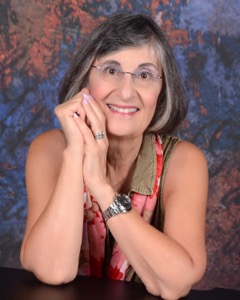
Amateur Example: I took this photo with my really nice camera I bought on a Black Friday Deal a couple of years ago. We took like 30 shots and this is the only one I didn't hate.


Professional Example:


I paid for a 30 minute session. We met at an old library. She took a bunch of shots, sent me about 15, and I seriously like all of them. With her lighting, superior equipment and artistic eye, she made me look younger and like I'd lost 15 pounds. She gave simple instruction like, "chin out a little more," or, "lean forward slightly," or, "That yellow background is washing you out. Lets move over here."

This looks professional, flattering, and the high resolution means it will maintain its quality even when resized. This is important since you'll be sending this file to interviews and author/illustrator visits.


A few tips: Tiny print on your clothes doesn't always translate well on camera.

Some poses feel awkward but look great on camera.

Stop to relax you face after holding the smile for so long.

Call around to photographers. I don't believe the one I worked with advertised a 30 minute session, but when I explained what I needed she said a full hour session was unnecessary. Although, she started having fun with some shots and we did go a little over our time, but she didn't charge me extra.

Also, HAVE FUN! For that photo session, you are the star.

Saturday, March 30, 2019

Publishing: The Good, The Bad, Your Perspective


You have a contract. Yay!


Plans and dates change…Crud.


My debut picture book was scheduled to publish on April 2nd. Due to some issues with the actual printer (no fault of the publishing house, machinery was being replaced) the date was pushed to the 16th and now to May 7th.

Luckily for me, the publisher is on top of things and we’ll still have books for all the events already scheduled.


As I told this news to friends and family, they got loud and frustrated on my behalf. But to all my authors and illustrators out there I have a word of advice.


Chill.

Sure, plans changing stinks, but my book is still coming out. Shaking my fist at the sky and cursing the book gods won’t get it printed any faster. Getting upset doesn’t fix anything (although at times it is easy and even stress relieving to stomp your feet and grumble).

Publishing will be full of delays and changes. At school visits there will be technical difficulties. There may be bookstore visits with only one customer or festivals that get rained out. Things happen and you need to know this going in.

Roll with the changes and mishaps as best you can.

Now I have the opportunity, for all of my April visits, to let people know they are getting an exclusive. They can see and purchase Odd Animal ABC’s a month before anyone else. So those children at the school visits get to feel special. Those bookstore shoppers get the jump on the rest of the world. That is pretty cool.

It is all a matter of perspective.

Sunday, February 3, 2019

So, you have a children’s book coming out…Part Two – Scheduling Author Visits


You did the work writing…editing…submitting...contracts…editing… and soon your book will be out in the world.

At less than two months before my book birthday I’m starting to work on visits to bookstores, schools, and libraries. But how do you set them up?

Well, you’ve already set up your online platform (even just a super basic website will do) so people can reach out to you. But you aren’t famous yet, so people probably aren’t knocking on your door.

Your publisher will probably make a flyer and/or give you marketing information or supplies. Those of you who are self-publishing
should make one, or have one made. 


It has all the information:

Who – Wrote and Illustrated – June Smalls and Claire Sedovic

What – Humorous picture book about animals and the alphabet.

When – Publication Date: 4-2-19

Where – Can it be purchased – Blue Manatee Press and IPG.

Don’t forget the cover art!

Publishers may also set up some of your author visits. But don't expect them to do all the work. You can and should help with marketing to make your book as successful as possible.

Start small and start local. Is there a local indie bookstore in your area? Walk in, introduce yourself, show your flyer, and offer to do a signing. Many indie stores even work with local schools and may know who nearby may be interested in visits.

What about your co-workers at your day job? Oh, one of them has a sister who teaches first grade? Sweet – get or give contact info. Networking like this can be organic. Work at your own pace and don’t overbook or overwork yourself.

Do you live near the schools you attended as a child? Do you have a child currently in schools with the right demographic for your book? Reach out, contact their teachers or the librarians. You may want to start with free or discounted rates until you are comfortable with your presentations and their value.

Know before you reach out what exactly you are offering. Are you just doing a reading and signing? Do you have a presentation suitable for a small class or a whole auditorium? Have you practiced and timed your presentation, leaving time for questions? Do you use a PowerPoint or props or have art to share?

We can break down what all your author visit can entail, but that is a post for another day.

Once you start a dialogue with your school or store contact, let them know what you need. Also, be prepared for technology to fail. Stuff happens and you may have to adapt.


Monday, January 21, 2019

So, you have a children’s book coming out…Part One: On Line Presence


My debut picture book, Odd Animal ABC's, comes out in just over two months. So what am I doing to prepare? Well, I’m learning as I go since there is no one perfect directive on how to sell a bajillion books. Here is what I’m learning about your Online Presence.


First things first:

People need to be able to find you and your books online. You don't need to be a part of every social media outlet ever created. I’m not part of all of these, and I’m not promoting any one in particular, but here are some to look into. Find what works for you or ones that don't need up-keep.

No matter what you choose to participate in on social media be sure it is appropriate for the age of your readers and professional. Agents and editors may read your posts once they are thinking of working with you. Kids may find them too as they are looking for your next book.


Amazon Author Page - See your sales, share info like tour events, blogs, etc.

Blog - A creative outlet and a way to connect with others. Blog as much as you want. There are many blog hosting sites to choose from. Topics? You can review books, interview peers, share cheesecake recipes and pictures of your pet. Content is up to you. 

Goodreads - You can have a verified Author Page. This takes just a few minutes to set up and maybe a day to become verified. You can interact here, but it isn't a requirement. You can review books, make a list of books you want to read, and track what you’ve already read.

Facebook - Highly interactive. You can chat, post pictures, host giveaways and more. Again, you should make sure this has content that you are comfortable with prospective publishing houses seeing. What works for someone who writes super edgy YA may be very different content than someone writing sweet and sentimental picture books. (This is also why some writers who span those two genres have a pen name for one or more of their genres.)

Instagram - Photos, videos, illustrations, and interaction, perfect for artist who want to connect.

Twitter - Short and sweet (tweet?). Each post only contains a max of 280 characters and/or a fun gif. A few minutes a day can keep you pretty active. There is a large writing community and hashtags to follow.

Website - Your website doesn't need to be elaborate or expensive. Clean, easy to navigate, with links for purchasing your books. If you plan to do school visits make sure there is a way for schools to reach out to you.

What About Branding?:

As a traditionally or self-published author, or illustrator, you are now a business. Consistent branding helps people recognize your work. Using your book cover as your avatar? What about using it across all your platforms. Your website name should be easy to figure out. www.YOURAUTHORNAME.com if possible. That way all the folks hunting on Google can find you with ease.


Debut Groups: Some writers team up with others in their genre that are debuting in the same year. These buddies cross promote through social media, interviews or guest posts on each other’s blogs, and they are there to stumble through the adventure with you.

Links: Don't forget to set up links so people can purchase your book. Like This: Order Now (yes, this is a shameless plug). Make it easy for buyers to access your book. 

Again, I’m not promoting any specific thing here. Maybe you just want a simple website and nothing more. That is OKAY.  Social media is a tool that can help with promoting. NOT a requirement. Don’t force yourself to spend time on social media if you hate it or if it becomes a burden and takes away from your creative time. 

You don’t need to try everything all at once. That could overwhelm you and take away any fun you may have had. Every writer and illustrator is different and finds what works for them over time. These aren’t the only social media site, there are more and, who knows, by the time I’m done writing this blog some new form of social media may have gone viral. Do what works for you and at your own pace.


Happy writing!

Tuesday, October 23, 2018

Agents, Inspiration, and Sales, Oh My!

A while back I posted about how I got my agent. It came down to a combo of good timing, her #MSWL post (which really summed up the type of MS I was just sending out to agents), and just really jiving well with each other.

While we all know Agents sell your work and cheer you on, sometimes they are your source for inspiration.

Back on International Woman's Day, March 8, 2018, Rebecca shot a simple tweet my way.
 
Of course I said, "I love elephants!" and we had a fun little back and forth where, like all highly evolved creatures, we spoke in GIFS and pictures.
 
 
But now I had a problem. I couldn't get this idea out of my head. Like I'd told my agent, I'd done a good amount of research on elephants already for a possible Chapter Book Series. I even went to meet one and interview a caretaker. But did I have enough info? I had only done generic research and it was mostly about captive elephants. Was there a solid story here?
 
I couldn't stop thinking about the elephant I met, the elephant matriarch, and their beautiful and complex family structure.
 
On March 12th, 2018 I emailed my agent a REALLY rough draft and asked, "Should I pursue this further?"
 
Her response was simply, "YES!!! Please pursue this !!!! :-)"
 
So I put everything else I was working on to the side, stayed up way too late watching elephants on the internet, Animal Planet, Net Geo, pulling every elephant book off the shelf at my library and pulling out all my old notes. After fast tracking it to my critique buddies I gave my agent on April 12th.
 
I was so attached to this piece. I lost sleep over it. I reached out to trusts in Africa to have it vetted. I was terrified that she'd say it was all wrong. (Not because she is mean or harsh, but every writer worries their stuff is crap at some point, right?)
 
She read it on April 16th. This is what I got back.
 

OH MY GOSH THIS IS AMAZING AND IT'S EXACTLEY WHAT I WAS WANTING WHEN I SHARED THAT PICTURE WITH YOU!!!!!!!!!!!!!!!!!!!!!!!!!!!!!!!!!!!!! Okay, I'm done writing

We sent it on an exclusive to an editor who ultimately didn't offer. Then we sent it on its first round of submissions.

Friday, August 3rd, 2018 it went out.

Tuesday the 7th we had interest and they wanted to call and speak with me. Within a month we had another editor who wanted a call. We received multiple offers but we chose to publish with Familius.
That they offered is still a little shocking since I'd never spoken with an editor or publisher on the phone so I nervous giggled for half of the conversation and forgot the English language a few times. Thankfully they still loved SHE LEADS. (Whether or not they think I'm nuttier than a peanut shell... we can't be sure.)

I signed the contract on Friday, September 14th. Six months after my Agent playfully pitched me an idea on twitter.

Agents are more than the person who can get your MS seen at big houses. They are more than a contract translator. They are friends and inspiration and cheerleaders and editors and I for one am thankful!

DISCLAIMER FOR WRITERS AND ILLUSTRATORS: This is not a normal timeframe! Six months is ridiculously fast!!! It took me about three years to sell my first picture book. I've been seriously writing for two to three years prior to that.

SHE LEADS: THE ELEPHANT MATRIARCH will be published in Spring, 2020 by Familius.


Sunday, September 11, 2016

Concept to Completion: Art Director Jim Hoover


Next on our journey following a picture book from concept to completion is the art director.


Joining us today is Jim Hoover with Viking Books. Jim, thank you so much for being willing to be a part of this series.  

Let’s start at the beginning. What happens when you get a call from, or have a meeting with, an editor?

I have worked with my team of editors for many years now, and I am proud to call them my coworkers, colleagues, and friends. So—often, a meeting isn’t so much ‘called’ as it sort of morphs from a casual conversation where we turn from shooting the breeze to “oh, you actually wanted to talk about work. Cool.”

Other times, someone shows up at your door with a stack of printouts or proofs, and it’s like “hey. What did we decide to do about this?”

“I dunno.”

“Okay, let’s figure it out.”

I truly think the world of my team and enjoy their company. We love our work, and it is completely collaborative. I always say that the fun and love we have for our books shows through in the final package.  We work hard, but most of the good days we barely notice.

And like any relationship, communication is key. If some snafu happens along the way during the process of a book it almost always boils down to miscommunication.


Above is a picture of me holding court with some of my coworker peeps. This is a picture from a very important meeting where we discussed the end of the last Game of Thrones season. I’m sure we did real work that day, too. To my right: Maggie Rosenthal (editorial assistant), Abigail Powers (copyeditor), Mariam Quraishi (design assistant), Amanda Mustafic (associate publicist), Krista Ahlberg (copyeditor), Nancy Brennan (associate art director), and Kate Renenr (senior designer.)


Sounds like a wonderful way to work. When working on a picture book do you communicate with the illustrator, the editor, or both?

With both. An art director’s job is to mediate comments from the editorial, sales and marketing teams to the illustrator and keep them on task and on time. We usually have a few ideas of our own, too.

What is your process when getting started with a new manuscript?

It actually still can surprise me after fifteen years how much the process can shift from one book to another. But GENERALLY, when I get a manuscript and need to find an illustrator, I have a few sources that I start with.

1.) I have a running list of illustrators that I have either always wanted to work with or am dying to work with again. Sometimes, it can take YEARS to find just the right (or another) book to work on. Patience is a virtue on all sides.

2.) I have a number of illustration agencies that I have worked with and trust. (I also have agents that I avoid like the plague.) I will go through their sites and (re)familiarize myself with their clients, and in many cases, reach out and ask for recommendations.

3.) I’ve usually found someone by this point, but every now and then, I’ll talk to other art directors and we will recommend folks to each other. Again, we also all have a running list of whom to avoid.

I’ll try to stay off the list of people to avoid. :-) Easy since I’m not an illustrator. What is your favorite part of the process?

Oooo, tough one. My favorite part of the process is probably when I get a few hours to sit with some good tunes on and just play with type and color. There is this wonderful ‘quiet before the storm’ moment when you are onto an idea for a cover or something when the whole thing is just YOURS to develop and work with, before anyone has weighed in on if it works, or needs to change, or just pulls the whole thing apart and sends you back to the drawing board.

I’ve lost days chasing an idea that I am pretty sure won’t make it past the first round of feedback, but I just want to let it breathe for a bit and enjoy it. Sometimes you can push through and really find something that’s special.

That sounds fantastic. I’m really seeing that every person on the path for a picture book is wildly creative. So when is your job finally ‘done’?

I guess when the book finally comes in from production as a finished, printed, bound object—that book is done. Otherwise, I am Sisyphus pushing that big ol’ boulder up the hill.


I think it’s like that at every phase. There is always ‘one more thing’ we can do, or tweak, or change. Now my favorite question; what is the longest and shortest time you’ve worked on a manuscript?

This really varies in an old skool hardcover imprint like Viking. We seldom push something through too fast. I would say the shortest has been five or six months.  On the flipside of that, I have one project that I have been working on for three years and it’s STILL not done. I know editors closing in on FIVE YEARS with some manuscripts. Some books just need more room to develop and grow than others. One of my favorite author/illustrators once lamented that she wishes she could do one picture book a year, and it usually takes her a year and a half, and occasionally two. But her books are perfect and beautiful. I am a quality over quantity sort of guy.

Six month to 5 years. That's a pretty big range. Publishing = Patience.
Do you deal with any other people within the publishing house? If so, who?

Publishing is a team effort. We work with marketing, sales, publicity, upper management, sales reps out in the field, authors, estates, stock houses, foundations, sometimes even spouses. It takes a village to raise a child and a House to make a book.

It takes a village to raise a child and a House to make a book.


Best. Line. EVER.

Every author needs to know, are illustration notes evil? This is something we hear conflicting info on.

Here’s what authors need to know about working with illustrators on a picture book. Once an illustrator has been assigned, you both become COAUTHORS. They are going to bring something to the table that you could not have counted on. Illustrators turn word documents into living, breathing things.

So, as you write, breaking a story down by spread is a great idea (I do know some art directors and editors that disagree with me here) but breaking down a manuscript by spread allows you to control the pacing of a story. There are some broad illustration notes that may be necessary, but beyond these two things, it really is best to keep illustration notes down to a minimum. This is not something that should be micromanaged, and it could even work against you in finding an editor.

Is there anything you wish authors knew that would make your job easier?

The biggest frustration is when an author doesn’t understand that once a publisher is signed up, their book is no longer their own thing existing in a vacuum. We have teams of people with decades of experience and direct knowledge of what will do well out in the market and what won’t. Have faith in the team that has faith in your book.

Have faith in the team that has faith in your book.


No I in team. Check.

Is there anything you wish illustrators knew that would make your job easier?

Deadlines are SO important. There is always a few days or even a week or two grace period, but some illustrators will blow deadlines by MONTHS. Understand that you are shooting yourself and the book in the foot the further away you get from an agreed-upon deadline.

*Double checks calendar to see if I’m late for anything.*  No, I’m safe for now. What fuels your creative time? Chocolate, coffee, music?

Are you a mind reader? :o) This is the holy trinity of my creative fuel. Sometimes I get caught dancing in my chair while making boring corrections to a novel interior, and I keep a chocolate stash in my top drawer, but shhh! Don’t tell anyone! 

Shh. Don’t blow my mind reading secret.  And thank you for that image. Now I’m going to imagine everyone chair dancing as they work on their books. :-P

Thank you again Jim for sharing your part in the publishing journey. Thank you for what you do! And P.S. I’m totally snagging some chocolate if I ever come visit your office.

For you readers who want to know more about Viking follow them on Twitter at: https://twitter.com/VikingChildrens

Or find them on the web at: penguinrandomhouse.com
and

Friday, September 2, 2016

Concept to Completion: Editor

Since this is a holiday weekend we are posting a little early. Have a great Labor Day!

This series of Concept to Completion started during a Skype session with Editor Kelly Delaney. I took a class with her and invested in the one-on-one session. (SO WORTH IT.) I asked just how many hands are on a picture book from writing to reader.  You know what I found out? WAY MORE THAN I IMAGINED.

 
Today I’m happy to introduce Kelly Delaney, Associate Editor at Alfred A. Knopf Booksfor Young Readers.

 
Thank you for coming out today, Kelly. So we all want to know, what exactly does an editor do for picture book manuscripts?

 
Editors work with authors to make the text as clear, concise, and engaging as possible. We also work with the design department to select an illustrator and, with the book’s designer, act as the go-between with the illustrator and author as the sketches and final art are developed.

 
After the text and illustrations are on their way, we present the book to the rest of the company—sales, marketing, publicity, subrights, etc.—and work with them to make sure the book finds its way into the hands of readers who will treasure it. There are a million little details in between, but that’s the gist of it!

 
That’s a lot of people you have to deal with! What happens when you fall in love with a picture book manuscript?

 
Usually I take the manuscript to an editorial meeting to solicit feedback from colleagues about its quality and, more importantly, its marketability (just because I love something doesn’t mean it will sell). If we’re in agreement that it’s worth acquiring, I fill out a form and a spreadsheet detailing how much I think it will sell and why, based on its sales hooks and comparative titles. I use those details to craft an offer, and present it to the book’s agent.

 
Do you ever have to fight for a story you love?

 
Yes. Sadly, not everything with great writing is marketable, and publishing is a business. I’ve often gone back to an author and asked them if they’d be willing to revise based on my editorial feedback in an attempt to bring it to where it needs to be. Sometimes this leads to an acquisition, but often I do just need to let a book go. That’s never easy, but in that situation I’ll usually tell the author (or agent, more likely) that I’d love to see more work from them in the future.

 
How long do you edit a picture book or, a better question may be, what were the shortest and longest periods of time you spent editing a picture book?

 
I’m working on a book now that is ready for copyediting a week after I signed it up! The edits were very spare and didn’t require any major restructuring. Other books can take much longer, depending on what needs to be addressed or on the author’s schedule—they may have other projects that take priority, which we’ll factor into the book’s schedule. And of course, more edits may come with the art. It can take anywhere from a few days to a few months, but I’ve never worked on a book that didn’t need any editing at all.


I’ve never worked on a book that didn’t need any editing at all.


That is a great thing to keep in mind. There is always room for improvement. Is there a separate copy editor in your house or do you do the copy editing after the big picture changes are made?

 
We have a copyediting team that looks at every book several times.

 
A team?! Wow. Is editing a 9-5 gig or do you find yourself doing editorial work at home?

 
I read at home a lot. It’s easier to get it done away from email, a busy office, etc. I don’t think I’ve ever brought a picture book home with me, though—just novels.

 
How much caffeine/sugar/health food of choice is needed to fuel you through your workday?

 I don’t really track my diet in this way, but I usually have an iced coffee in the morning and eat as balanced as I can (though an abundance of treats and snacks in the office seems to be an occupational hazard of working in children’s publishing). My energy is more impacted by how active I am, so I try to work out daily and/or walk to and from work. 
 

Something we should all try to work into our day. My hair looks like Wally's when I'm done a work out. And you can feel free to share the chocolate in your office. Just sayin'.

So is there anything else you think authors should know?

 
Remember that revision is a part of the process that doesn’t end when your manuscript is acquired—and that an editor wouldn’t work to revise something with you if they didn’t love it. It’s not an attack on your work, but an attempt to make it as strong as possible so that it will appeal to as many readers as possible. We all have the same goal, which is to get your book into the hands of as many readers as we can!

Also, I’ve talked to a lot of writers who worry about details like how to format a manuscript submission, how art notes should look, and things like that. That should not be a source of stress for you. Be organized and clear, and follow any submission guidelines that exist. The more important part is to focus on your writing and hone your craft. If I love a manuscript, an unnecessary art note is not going to change that.

 
You heard it here authors and illustrators: Editors are on our team and want the same things for our books as we do.

 
Thank you so much Kelly for taking time to share your job with us. It’s great to peek behind the curtain and see just how much work, and how many people work, to get a picture book out into the world.

Next time...Art Director