Showing posts with label Writing Goals. Show all posts

Monday, January 21, 2019

So, you have a children’s book coming out…Part One: On Line Presence


My debut picture book, Odd Animal ABC's, comes out in just over two months. So what am I doing to prepare? Well, I’m learning as I go since there is no one perfect directive on how to sell a bajillion books. Here is what I’m learning about your Online Presence.


First things first:

People need to be able to find you and your books online. You don't need to be a part of every social media outlet ever created. I’m not part of all of these, and I’m not promoting any one in particular, but here are some to look into. Find what works for you or ones that don't need up-keep.

No matter what you choose to participate in on social media be sure it is appropriate for the age of your readers and professional. Agents and editors may read your posts once they are thinking of working with you. Kids may find them too as they are looking for your next book.


Amazon Author Page - See your sales, share info like tour events, blogs, etc.

Blog - A creative outlet and a way to connect with others. Blog as much as you want. There are many blog hosting sites to choose from. Topics? You can review books, interview peers, share cheesecake recipes and pictures of your pet. Content is up to you. 

Goodreads - You can have a verified Author Page. This takes just a few minutes to set up and maybe a day to become verified. You can interact here, but it isn't a requirement. You can review books, make a list of books you want to read, and track what you’ve already read.

Facebook - Highly interactive. You can chat, post pictures, host giveaways and more. Again, you should make sure this has content that you are comfortable with prospective publishing houses seeing. What works for someone who writes super edgy YA may be very different content than someone writing sweet and sentimental picture books. (This is also why some writers who span those two genres have a pen name for one or more of their genres.)

Instagram - Photos, videos, illustrations, and interaction, perfect for artist who want to connect.

Twitter - Short and sweet (tweet?). Each post only contains a max of 280 characters and/or a fun gif. A few minutes a day can keep you pretty active. There is a large writing community and hashtags to follow.

Website - Your website doesn't need to be elaborate or expensive. Clean, easy to navigate, with links for purchasing your books. If you plan to do school visits make sure there is a way for schools to reach out to you.

What About Branding?:

As a traditionally or self-published author, or illustrator, you are now a business. Consistent branding helps people recognize your work. Using your book cover as your avatar? What about using it across all your platforms. Your website name should be easy to figure out. www.YOURAUTHORNAME.com if possible. That way all the folks hunting on Google can find you with ease.


Debut Groups: Some writers team up with others in their genre that are debuting in the same year. These buddies cross promote through social media, interviews or guest posts on each other’s blogs, and they are there to stumble through the adventure with you.

Links: Don't forget to set up links so people can purchase your book. Like This: Order Now (yes, this is a shameless plug). Make it easy for buyers to access your book. 

Again, I’m not promoting any specific thing here. Maybe you just want a simple website and nothing more. That is OKAY.  Social media is a tool that can help with promoting. NOT a requirement. Don’t force yourself to spend time on social media if you hate it or if it becomes a burden and takes away from your creative time. 

You don’t need to try everything all at once. That could overwhelm you and take away any fun you may have had. Every writer and illustrator is different and finds what works for them over time. These aren’t the only social media site, there are more and, who knows, by the time I’m done writing this blog some new form of social media may have gone viral. Do what works for you and at your own pace.


Happy writing!

Saturday, December 29, 2018

Steal TIme


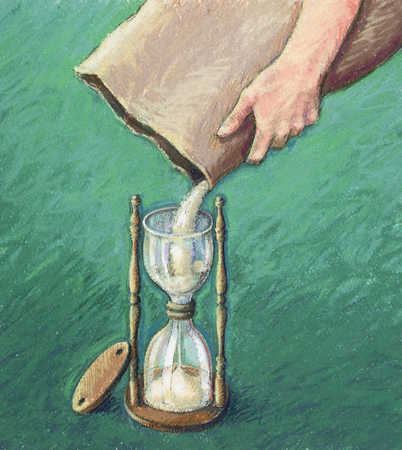
As 2018 comes to a close and people are talking about their 2019 resolutions, I'm seeing many people who talk about making time for their writing, or lamenting that things got too busy in 2018. I'm going to let you in on a secret. Your time is yours, and if you can't make time - you should steal it.

Little bits add up like drops of water to fill a glass.

Grab notebooks. One for your purse or backpack, one for your kitchen, one for your car. Don't forget that your phone is a handy tool.

When an idea for that perfect character name pops into your head, text it to yourself. Only takes 1 minute.

When you are sitting in your car at your kids practice waiting for them to find their other shoe - grab that notebook and jot down some plot points. Another 5 minutes stolen back for your writing.

Oh, are you trapped at the car place getting your oil changed? Where are the pens? Here is 20 minutes to work on dialogue between your two main characters.

Lunch break? 30 minutes to use your smart phone to research owls and jot down all of that gross stuff about pellets while eating at your favorite spot. (For the squeamish maybe swap pellet research with that oil change dialogue writing.)

Don't feel guilty when the family is fed and you say, "I'm going to go write for 20 or 30 minutes. Entertain yourselves." (This may be harder for those with super young kids, but do what you can)

There is also a 5 am writers club I see on Twitter. I won't lie - I'm not a morning person and probably won't ever do this one. But it may work for you! If 5 am doesn't work, what about waking up just 20 minutes early?

If your goal this year is to write more then go for it. Even if it is only 5 minutes or 10 minutes here or there. You don't have to write every single day if it doesn't work for you, but you do need to write. Writing is writing whether it is using a pencil, typing on a computer, or using your smart phone.

Don't forget to make time/steal time to read as well. It is market research that is vital to your trade.

Best of luck for a healthy, happy, and productive new year!

Monday, January 2, 2017

Happy New Year 2017


I'm here to say goodbye to 2016 and welcome 2017. 

This year I want all you writers to make realistic resolutions.

Write more.
Write without distractions.
Write without fear.
Write with your heart.
REVISE, REVISE, REVISE.
REVISE.

Yes, it is a lovely thought to say, "This year my resolution is to become a published author." Unless you are self publishing there are too many things out of your control.

This year I hope to polish, revise, write, research. All of which are in my control. Patience, focus, and drive are within my control. Dedication is within my control.

Don't beat yourselves up with things don't go to plan. This business is subjective and slow, which is difficult for us to grasp in a time of instant gratification. 

I wish everyone a productive new year. I wish you inspiration. I wish you peace.

Happy New Year! Happy Writing!


Sunday, September 18, 2016

Concept to Completion: Illustrator


Welcome to Reading, Writing, and Reaching for Chocolate. The next stop on the road from concept to completion of a picture book is the Illustrator. Today we have an interview with Vanessa Brantley Newton, Illustrator of My Three Best Friends and Me, Zulay, The Hula Hoopin’ Queen, and (one of my personal favorites-literally made me tear up) Sewing Stories. Her most recent illustrations can be seen in Mary Had a Little Glam.


Thank you for joining me Vanessa. So let’s start at the beginning. What happens when you get a call from an art director?

I really love to hear from my art directors, but of late some of them I only get to talk to once or twice on the phone and sometimes not at all.

I prefer a phone call instead of emails. Email sometimes can come across as cold to me. I like to hear the excitement in an art director's or editor's voice. It helps me to understand what they are looking for as well. I like to start all of my projects off with a kick off call. Just to get a feel for who I am going to be working with, what they expect of me and what I in turn want to express through my work.

So when I get a call from art director, they basically tell me what the size or specs of the project are. I am asked if I have any idea of how I will approach the work. If it will be live work (meaning traditional paint, paper, collage) or will it be digital files. We talk about building characters for the stories and if it's historically based, they will sometimes send references and information they have collected to help in the process. Sometimes all I get it the spec of the project and they leave me to created sketches and then after the first round of sketches they will tell me what they would like to see changed and if the author has anything suggestions they include those as well.

 Do you communicate with the art director, the editor, or both?

So, some Publishing houses don't have art directors and it's all left to the editor. I get to work with both and sometimes just one or the other.

What is your process when getting started with a new manuscript? 

I am dyslexic and so it takes a while for me to get through the simplest of stories. I read them to myself and then I have my husband or daughter or someone read it out loud to me so I can picture it in my head. Hearing it read out loud is super important for me. It helps me to grasp the story and the characters or character in the story and what the story feels like.


That’s amazing, and wonderful that your family helps! I like to hear my words aloud by others too, to get a sense of flow.

So once you get the go-ahead from the art director what is your final process?

Every time I start a picture book or middle grade reader, it's like doing it over the first time every single time for me. Some illustrators don't have that situation. I do.  I have been at this for years now and still it's like the very first time every single time LOL!

I usually take a week to just think of how I want to approach the book. During that week, I start to birth the characters. I look through magazines and photos. I visit Pinterest and look at children. I go to Barnes and Noble and watch the children. Collecting information and references all the while. I am a people watcher and this helps me greatly in my illustration work.


Then I starting working out the story and story boarding and doing some rough sketches and then they are sent to the publisher and then they will send them back in a few weeks and then there is usually a second round of sketches and then when approved I take it all to finish. Even after they are all finished and colored and collaged, there is still the process of looking them over and finding anything that isn't working or needs to be adjusted.

When everything has been fixed and adjusted it goes to print for proofing and then F&G's* are sent to me and the author to see what the first print looks like. Before you know it, a box of book are sitting at your doorstep. LOL!!

(Note for newbie’s to the industry-or oldies who don’t do acronyms: F&G means a folded and gathered or an unbound book. This gives those working on the book the first glimpse of what the finished product can be. This is the last chance to catch changes that need to be made before final printing.)

What is your favorite part of the process?

I am just starting to embrace and like the process of sketching, but my favorite part of all is actually creating the character and then creating the finishes! So I have two parts that I love.


As an author-only, I am so jealous of the creation of the character. I’m can’t wait to see what my characters look like ‘in person.’  What is the longest and shortest time you’ve worked on a manuscript?

3 months and 3-4 years.


Do you deal with any other people within the publishing house? If so, who? 

Sometimes when they are wanting to promote the book I will hear from a publicist for the publisher and they will tell me what they have in mind to move the book. Such as book festivals, book signings and other events.
 

Is there anything you wish authors knew that would make your job easier?

That illustration is a whole other ball of wax. Some illustrators don't like artist notes, but then there are some of us that do. I am one of those Illustrators that do. It's when they begin to interfere with the process that it becomes a problem. I have only had two of those situations. One was with a publisher and another with a self-published job. Nearly drove me crazy LOL! Mostly it's a process and sometimes it goes rather quickly and then sometimes it takes a whole lot longer.

Any advice for aspiring illustrators?

Hone your gift! Draw everything and every day. Try different art supplies. The ones that go together and the ones that don't. Be brave and break the rules and see what comes from it. You may surprise yourself and others too.  When building a portfolio only put the things that you are proud of in there. Don't put half done work in there when you are looking for work. They only want to see what puts a smile on your face and what you are most proud of.

When trying to get a job in children's pub please put children into your folio. Children, moving, dancing, bouncing, singing, being kind or being rambunctious! Create characters that speak to the audience. Give them personality by giving them names and places that they come from and remember there is never any competition unless you invite it in. Nobody can do what you do. Your style is your style and nobody can bring to the creative table what only you can bring so develop your style and then hone it.

What fuels your creative time? Chocolate, coffee, music?

Music, music and music. Oh my goodness I can't go a day without music. I listen to a lot of happy music as to why my illustrations are often happy ones. R and B, Hip Hop or conscious music, gospel, classical, meditative. It creates an atmosphere for me to work in. Music is like paint to me. I have different paints for different illustrations and the same goes for my music.

What wonderful advice and insights. Thank you again for coming out to the blog, Vanessa. I can’t wait to see what you draw up next.


Sunday, September 11, 2016

Concept to Completion: Art Director Jim Hoover


Next on our journey following a picture book from concept to completion is the art director.


Joining us today is Jim Hoover with Viking Books. Jim, thank you so much for being willing to be a part of this series.  

Let’s start at the beginning. What happens when you get a call from, or have a meeting with, an editor?

I have worked with my team of editors for many years now, and I am proud to call them my coworkers, colleagues, and friends. So—often, a meeting isn’t so much ‘called’ as it sort of morphs from a casual conversation where we turn from shooting the breeze to “oh, you actually wanted to talk about work. Cool.”

Other times, someone shows up at your door with a stack of printouts or proofs, and it’s like “hey. What did we decide to do about this?”

“I dunno.”

“Okay, let’s figure it out.”

I truly think the world of my team and enjoy their company. We love our work, and it is completely collaborative. I always say that the fun and love we have for our books shows through in the final package.  We work hard, but most of the good days we barely notice.

And like any relationship, communication is key. If some snafu happens along the way during the process of a book it almost always boils down to miscommunication.


Above is a picture of me holding court with some of my coworker peeps. This is a picture from a very important meeting where we discussed the end of the last Game of Thrones season. I’m sure we did real work that day, too. To my right: Maggie Rosenthal (editorial assistant), Abigail Powers (copyeditor), Mariam Quraishi (design assistant), Amanda Mustafic (associate publicist), Krista Ahlberg (copyeditor), Nancy Brennan (associate art director), and Kate Renenr (senior designer.)


Sounds like a wonderful way to work. When working on a picture book do you communicate with the illustrator, the editor, or both?

With both. An art director’s job is to mediate comments from the editorial, sales and marketing teams to the illustrator and keep them on task and on time. We usually have a few ideas of our own, too.

What is your process when getting started with a new manuscript?

It actually still can surprise me after fifteen years how much the process can shift from one book to another. But GENERALLY, when I get a manuscript and need to find an illustrator, I have a few sources that I start with.

1.) I have a running list of illustrators that I have either always wanted to work with or am dying to work with again. Sometimes, it can take YEARS to find just the right (or another) book to work on. Patience is a virtue on all sides.

2.) I have a number of illustration agencies that I have worked with and trust. (I also have agents that I avoid like the plague.) I will go through their sites and (re)familiarize myself with their clients, and in many cases, reach out and ask for recommendations.

3.) I’ve usually found someone by this point, but every now and then, I’ll talk to other art directors and we will recommend folks to each other. Again, we also all have a running list of whom to avoid.

I’ll try to stay off the list of people to avoid. :-) Easy since I’m not an illustrator. What is your favorite part of the process?

Oooo, tough one. My favorite part of the process is probably when I get a few hours to sit with some good tunes on and just play with type and color. There is this wonderful ‘quiet before the storm’ moment when you are onto an idea for a cover or something when the whole thing is just YOURS to develop and work with, before anyone has weighed in on if it works, or needs to change, or just pulls the whole thing apart and sends you back to the drawing board.

I’ve lost days chasing an idea that I am pretty sure won’t make it past the first round of feedback, but I just want to let it breathe for a bit and enjoy it. Sometimes you can push through and really find something that’s special.

That sounds fantastic. I’m really seeing that every person on the path for a picture book is wildly creative. So when is your job finally ‘done’?

I guess when the book finally comes in from production as a finished, printed, bound object—that book is done. Otherwise, I am Sisyphus pushing that big ol’ boulder up the hill.


I think it’s like that at every phase. There is always ‘one more thing’ we can do, or tweak, or change. Now my favorite question; what is the longest and shortest time you’ve worked on a manuscript?

This really varies in an old skool hardcover imprint like Viking. We seldom push something through too fast. I would say the shortest has been five or six months.  On the flipside of that, I have one project that I have been working on for three years and it’s STILL not done. I know editors closing in on FIVE YEARS with some manuscripts. Some books just need more room to develop and grow than others. One of my favorite author/illustrators once lamented that she wishes she could do one picture book a year, and it usually takes her a year and a half, and occasionally two. But her books are perfect and beautiful. I am a quality over quantity sort of guy.

Six month to 5 years. That's a pretty big range. Publishing = Patience.
Do you deal with any other people within the publishing house? If so, who?

Publishing is a team effort. We work with marketing, sales, publicity, upper management, sales reps out in the field, authors, estates, stock houses, foundations, sometimes even spouses. It takes a village to raise a child and a House to make a book.

It takes a village to raise a child and a House to make a book.


Best. Line. EVER.

Every author needs to know, are illustration notes evil? This is something we hear conflicting info on.

Here’s what authors need to know about working with illustrators on a picture book. Once an illustrator has been assigned, you both become COAUTHORS. They are going to bring something to the table that you could not have counted on. Illustrators turn word documents into living, breathing things.

So, as you write, breaking a story down by spread is a great idea (I do know some art directors and editors that disagree with me here) but breaking down a manuscript by spread allows you to control the pacing of a story. There are some broad illustration notes that may be necessary, but beyond these two things, it really is best to keep illustration notes down to a minimum. This is not something that should be micromanaged, and it could even work against you in finding an editor.

Is there anything you wish authors knew that would make your job easier?

The biggest frustration is when an author doesn’t understand that once a publisher is signed up, their book is no longer their own thing existing in a vacuum. We have teams of people with decades of experience and direct knowledge of what will do well out in the market and what won’t. Have faith in the team that has faith in your book.

Have faith in the team that has faith in your book.


No I in team. Check.

Is there anything you wish illustrators knew that would make your job easier?

Deadlines are SO important. There is always a few days or even a week or two grace period, but some illustrators will blow deadlines by MONTHS. Understand that you are shooting yourself and the book in the foot the further away you get from an agreed-upon deadline.

*Double checks calendar to see if I’m late for anything.*  No, I’m safe for now. What fuels your creative time? Chocolate, coffee, music?

Are you a mind reader? :o) This is the holy trinity of my creative fuel. Sometimes I get caught dancing in my chair while making boring corrections to a novel interior, and I keep a chocolate stash in my top drawer, but shhh! Don’t tell anyone! 

Shh. Don’t blow my mind reading secret.  And thank you for that image. Now I’m going to imagine everyone chair dancing as they work on their books. :-P

Thank you again Jim for sharing your part in the publishing journey. Thank you for what you do! And P.S. I’m totally snagging some chocolate if I ever come visit your office.

For you readers who want to know more about Viking follow them on Twitter at: https://twitter.com/VikingChildrens

Or find them on the web at: penguinrandomhouse.com
and

Friday, September 2, 2016

Concept to Completion: Editor

Since this is a holiday weekend we are posting a little early. Have a great Labor Day!

This series of Concept to Completion started during a Skype session with Editor Kelly Delaney. I took a class with her and invested in the one-on-one session. (SO WORTH IT.) I asked just how many hands are on a picture book from writing to reader.  You know what I found out? WAY MORE THAN I IMAGINED.

 
Today I’m happy to introduce Kelly Delaney, Associate Editor at Alfred A. Knopf Booksfor Young Readers.

 
Thank you for coming out today, Kelly. So we all want to know, what exactly does an editor do for picture book manuscripts?

 
Editors work with authors to make the text as clear, concise, and engaging as possible. We also work with the design department to select an illustrator and, with the book’s designer, act as the go-between with the illustrator and author as the sketches and final art are developed.

 
After the text and illustrations are on their way, we present the book to the rest of the company—sales, marketing, publicity, subrights, etc.—and work with them to make sure the book finds its way into the hands of readers who will treasure it. There are a million little details in between, but that’s the gist of it!

 
That’s a lot of people you have to deal with! What happens when you fall in love with a picture book manuscript?

 
Usually I take the manuscript to an editorial meeting to solicit feedback from colleagues about its quality and, more importantly, its marketability (just because I love something doesn’t mean it will sell). If we’re in agreement that it’s worth acquiring, I fill out a form and a spreadsheet detailing how much I think it will sell and why, based on its sales hooks and comparative titles. I use those details to craft an offer, and present it to the book’s agent.

 
Do you ever have to fight for a story you love?

 
Yes. Sadly, not everything with great writing is marketable, and publishing is a business. I’ve often gone back to an author and asked them if they’d be willing to revise based on my editorial feedback in an attempt to bring it to where it needs to be. Sometimes this leads to an acquisition, but often I do just need to let a book go. That’s never easy, but in that situation I’ll usually tell the author (or agent, more likely) that I’d love to see more work from them in the future.

 
How long do you edit a picture book or, a better question may be, what were the shortest and longest periods of time you spent editing a picture book?

 
I’m working on a book now that is ready for copyediting a week after I signed it up! The edits were very spare and didn’t require any major restructuring. Other books can take much longer, depending on what needs to be addressed or on the author’s schedule—they may have other projects that take priority, which we’ll factor into the book’s schedule. And of course, more edits may come with the art. It can take anywhere from a few days to a few months, but I’ve never worked on a book that didn’t need any editing at all.


I’ve never worked on a book that didn’t need any editing at all.


That is a great thing to keep in mind. There is always room for improvement. Is there a separate copy editor in your house or do you do the copy editing after the big picture changes are made?

 
We have a copyediting team that looks at every book several times.

 
A team?! Wow. Is editing a 9-5 gig or do you find yourself doing editorial work at home?

 
I read at home a lot. It’s easier to get it done away from email, a busy office, etc. I don’t think I’ve ever brought a picture book home with me, though—just novels.

 
How much caffeine/sugar/health food of choice is needed to fuel you through your workday?

 I don’t really track my diet in this way, but I usually have an iced coffee in the morning and eat as balanced as I can (though an abundance of treats and snacks in the office seems to be an occupational hazard of working in children’s publishing). My energy is more impacted by how active I am, so I try to work out daily and/or walk to and from work. 
 

Something we should all try to work into our day. My hair looks like Wally's when I'm done a work out. And you can feel free to share the chocolate in your office. Just sayin'.

So is there anything else you think authors should know?

 
Remember that revision is a part of the process that doesn’t end when your manuscript is acquired—and that an editor wouldn’t work to revise something with you if they didn’t love it. It’s not an attack on your work, but an attempt to make it as strong as possible so that it will appeal to as many readers as possible. We all have the same goal, which is to get your book into the hands of as many readers as we can!

Also, I’ve talked to a lot of writers who worry about details like how to format a manuscript submission, how art notes should look, and things like that. That should not be a source of stress for you. Be organized and clear, and follow any submission guidelines that exist. The more important part is to focus on your writing and hone your craft. If I love a manuscript, an unnecessary art note is not going to change that.

 
You heard it here authors and illustrators: Editors are on our team and want the same things for our books as we do.

 
Thank you so much Kelly for taking time to share your job with us. It’s great to peek behind the curtain and see just how much work, and how many people work, to get a picture book out into the world.

Next time...Art Director


Monday, August 29, 2016

Concept to Completion: Agent

Agents are busy people who only make money once a book is sold. I had many kind and generous agents who have agreed to interviews for this blog. Unfortunately none were available in time for this series. (We'll be seeing them in the fall.)

Since I wanted to keep this in order for when future readers go through the entire series, this is going to be a placeholder for an interview.

I will say that having an agent opens doors that you may not be able to get through on your own.

Some publishing houses are closed to unsolicited manuscripts and without an agent you can only sub to them if you've met them at a class or conference.

Also, a good agent is going to be honest with you about if your manuscript is ready. They may even be editorial and assist you in getting your manuscript to the next level before sending it on submission.

An agent will also be more likely to get you better terms if/when you get an offer. They are familiar with contracts and clauses, advances, royalties, rights, publishing houses of every size, plus they become a supporter of your work in many ways.

When subbing to agents be mindful that this is a professional situation. Letters should be organized, proofread, and polite. If an agent gives you any feedback, even if they don't offer representation, please appreciate it. They don't get paid unless they are selling books, so if they take the time to give you a personal rejection, then you should take it as a compliment to your work. And I do believe it is a compliment.

If you are querying agents, I wish you the best of luck.

Coming Soon: An actual Agent Interview


Up Next:  Concept to Completion: Editor

Sunday, August 7, 2016

From Concept to Completion: How Many Hands Touch a Picture Book on the Publishing Journey?


When publishing traditionally, just what goes on getting your picture book out there?


You-Publisher-Consumer

Right?

Not quite.

During a talk with an editor recently, I asked just how many hands are on a picture book from concept and writing to completion and in the hands of the reader.  Here’s what I found out.

·         Author – This is the easy part. The creator of the manuscript. Sometimes this person is also the illustrator, but for this series we are looking at text only manuscripts.

**Hand count: 1**


·         Critique Partners/Beta Readers – Seriously-this should be a step. Find a critique group online or through groups like SCBWI. They can help you find what is working and what is not. They will push you to be a better writer. They will help you know when it is finally time to submit.

**Hand count: approx. 5-10 **


·         Agent – Not always necessary but I feel this is important to open doors and help you get your work extra polished before presenting it too publishers. Plus many publishers are closed to unsolicited submissions so you almost always need an agent to get into these houses.

**Hand count: 6-11**


·         Editor – Your agent, or yourself, will submit to an editor. If they love your story and see promise they will present it to their boss (or acquisitions team).

o   Inside the publishing house now: the Editor’s boss (or acquisitions team) will need to give the thumbs up to acquire the piece.

**Hand count: 7-12**


·         You and Editor – There will be back and forth during the editorial process. This may be a few simple changes and corrections or there may be a number of big changes. Each book is different.


·         Copy Editing –focuses on accuracy, formatting, and proofreading. Line edits people.

**Hand count: 8-13**


·         Design/Art Director – The art director does exactly that. They find and guide the artist in the direction to achieve the right ‘feeling’ for a book. They work with the editor and discuss what illustrators they think are right for the project. They are not just a stop on this chain of hands on you book, but more of a cog that is moving along with many other. They work with the editor, illustrator. Sometimes this is a team and not just an individual.

**Hand count: 9-16**


·         Illustrator – The partner that you may never even meet or talk to. This person will create concept drawings, work with the Design Dept/Art Director. After weeks, months, or occasionally years they will create the art that brings the text to life.

**Hand count: 10-17**


·         Production Editor- Production editors manage the publication. They deal with writers, editors, and vendors to ensure your picture book meet the house’s standards and that everyone meets deadlines. Sometimes these editors also proofread and edit the manuscript and offer feedback to writers and the other editors. (Notice ALL the editing to make sure your picture book is as perfect as can be?)

**Hand count: 11-18**


·         Sales – These are the people actively selling your finished book to vendors. Again not just an individual, but a team.

**Hand count: 12-21**


·         Publicity – These are the folks who create awareness for your book, gaining attention and interest.

**Hand count: 13-24**


·         Marketing – These folks, like with Publicity, create awareness and help sell the book. In some houses the Publicity and Marketing are one in the same.

**Hand count: 14-27**


·         Sub-rights- These are "sub-license" your picture book for various formats and adaptations in addition to the primary format. Additional sales could be film or television rights or translation to another language.

**Hand count: 15-28**


·         Book Sellers and Libraries – Such as Barnes & Noble, Amazon, and Indy Bookstores. The places we know and love.

**Hand count: 20-way too high of a number for me to even guess.**


·         Reader – Finally. This quick and simple process can take around 2 years on average and, depending on the size of the publishing house you are working with, you can easily have up to 20-30 people who have their hands on your precious manuscript to get it out into the world.

Traditional publishing takes a real team to get a book from concept to completion.  Over the next weeks I’m tracking down people in these fields to get interviews so we can see what goes on behind the scenes when making a picture book.


People in the publishing field, let me know if I skipped any jobs.

Please note all of my counts are approximations. These numbers can vary greatly depending on the size of the publishing houses.