Showing posts with label Query. Show all posts

Friday, September 2, 2016

Concept to Completion: Editor

Since this is a holiday weekend we are posting a little early. Have a great Labor Day!

This series of Concept to Completion started during a Skype session with Editor Kelly Delaney. I took a class with her and invested in the one-on-one session. (SO WORTH IT.) I asked just how many hands are on a picture book from writing to reader.  You know what I found out? WAY MORE THAN I IMAGINED.

 
Today I’m happy to introduce Kelly Delaney, Associate Editor at Alfred A. Knopf Booksfor Young Readers.

 
Thank you for coming out today, Kelly. So we all want to know, what exactly does an editor do for picture book manuscripts?

 
Editors work with authors to make the text as clear, concise, and engaging as possible. We also work with the design department to select an illustrator and, with the book’s designer, act as the go-between with the illustrator and author as the sketches and final art are developed.

 
After the text and illustrations are on their way, we present the book to the rest of the company—sales, marketing, publicity, subrights, etc.—and work with them to make sure the book finds its way into the hands of readers who will treasure it. There are a million little details in between, but that’s the gist of it!

 
That’s a lot of people you have to deal with! What happens when you fall in love with a picture book manuscript?

 
Usually I take the manuscript to an editorial meeting to solicit feedback from colleagues about its quality and, more importantly, its marketability (just because I love something doesn’t mean it will sell). If we’re in agreement that it’s worth acquiring, I fill out a form and a spreadsheet detailing how much I think it will sell and why, based on its sales hooks and comparative titles. I use those details to craft an offer, and present it to the book’s agent.

 
Do you ever have to fight for a story you love?

 
Yes. Sadly, not everything with great writing is marketable, and publishing is a business. I’ve often gone back to an author and asked them if they’d be willing to revise based on my editorial feedback in an attempt to bring it to where it needs to be. Sometimes this leads to an acquisition, but often I do just need to let a book go. That’s never easy, but in that situation I’ll usually tell the author (or agent, more likely) that I’d love to see more work from them in the future.

 
How long do you edit a picture book or, a better question may be, what were the shortest and longest periods of time you spent editing a picture book?

 
I’m working on a book now that is ready for copyediting a week after I signed it up! The edits were very spare and didn’t require any major restructuring. Other books can take much longer, depending on what needs to be addressed or on the author’s schedule—they may have other projects that take priority, which we’ll factor into the book’s schedule. And of course, more edits may come with the art. It can take anywhere from a few days to a few months, but I’ve never worked on a book that didn’t need any editing at all.


I’ve never worked on a book that didn’t need any editing at all.


That is a great thing to keep in mind. There is always room for improvement. Is there a separate copy editor in your house or do you do the copy editing after the big picture changes are made?

 
We have a copyediting team that looks at every book several times.

 
A team?! Wow. Is editing a 9-5 gig or do you find yourself doing editorial work at home?

 
I read at home a lot. It’s easier to get it done away from email, a busy office, etc. I don’t think I’ve ever brought a picture book home with me, though—just novels.

 
How much caffeine/sugar/health food of choice is needed to fuel you through your workday?

 I don’t really track my diet in this way, but I usually have an iced coffee in the morning and eat as balanced as I can (though an abundance of treats and snacks in the office seems to be an occupational hazard of working in children’s publishing). My energy is more impacted by how active I am, so I try to work out daily and/or walk to and from work. 
 

Something we should all try to work into our day. My hair looks like Wally's when I'm done a work out. And you can feel free to share the chocolate in your office. Just sayin'.

So is there anything else you think authors should know?

 
Remember that revision is a part of the process that doesn’t end when your manuscript is acquired—and that an editor wouldn’t work to revise something with you if they didn’t love it. It’s not an attack on your work, but an attempt to make it as strong as possible so that it will appeal to as many readers as possible. We all have the same goal, which is to get your book into the hands of as many readers as we can!

Also, I’ve talked to a lot of writers who worry about details like how to format a manuscript submission, how art notes should look, and things like that. That should not be a source of stress for you. Be organized and clear, and follow any submission guidelines that exist. The more important part is to focus on your writing and hone your craft. If I love a manuscript, an unnecessary art note is not going to change that.

 
You heard it here authors and illustrators: Editors are on our team and want the same things for our books as we do.

 
Thank you so much Kelly for taking time to share your job with us. It’s great to peek behind the curtain and see just how much work, and how many people work, to get a picture book out into the world.

Next time...Art Director


Sunday, August 7, 2016

From Concept to Completion: How Many Hands Touch a Picture Book on the Publishing Journey?


When publishing traditionally, just what goes on getting your picture book out there?


You-Publisher-Consumer

Right?

Not quite.

During a talk with an editor recently, I asked just how many hands are on a picture book from concept and writing to completion and in the hands of the reader.  Here’s what I found out.

·         Author – This is the easy part. The creator of the manuscript. Sometimes this person is also the illustrator, but for this series we are looking at text only manuscripts.

**Hand count: 1**


·         Critique Partners/Beta Readers – Seriously-this should be a step. Find a critique group online or through groups like SCBWI. They can help you find what is working and what is not. They will push you to be a better writer. They will help you know when it is finally time to submit.

**Hand count: approx. 5-10 **


·         Agent – Not always necessary but I feel this is important to open doors and help you get your work extra polished before presenting it too publishers. Plus many publishers are closed to unsolicited submissions so you almost always need an agent to get into these houses.

**Hand count: 6-11**


·         Editor – Your agent, or yourself, will submit to an editor. If they love your story and see promise they will present it to their boss (or acquisitions team).

o   Inside the publishing house now: the Editor’s boss (or acquisitions team) will need to give the thumbs up to acquire the piece.

**Hand count: 7-12**


·         You and Editor – There will be back and forth during the editorial process. This may be a few simple changes and corrections or there may be a number of big changes. Each book is different.


·         Copy Editing –focuses on accuracy, formatting, and proofreading. Line edits people.

**Hand count: 8-13**


·         Design/Art Director – The art director does exactly that. They find and guide the artist in the direction to achieve the right ‘feeling’ for a book. They work with the editor and discuss what illustrators they think are right for the project. They are not just a stop on this chain of hands on you book, but more of a cog that is moving along with many other. They work with the editor, illustrator. Sometimes this is a team and not just an individual.

**Hand count: 9-16**


·         Illustrator – The partner that you may never even meet or talk to. This person will create concept drawings, work with the Design Dept/Art Director. After weeks, months, or occasionally years they will create the art that brings the text to life.

**Hand count: 10-17**


·         Production Editor- Production editors manage the publication. They deal with writers, editors, and vendors to ensure your picture book meet the house’s standards and that everyone meets deadlines. Sometimes these editors also proofread and edit the manuscript and offer feedback to writers and the other editors. (Notice ALL the editing to make sure your picture book is as perfect as can be?)

**Hand count: 11-18**


·         Sales – These are the people actively selling your finished book to vendors. Again not just an individual, but a team.

**Hand count: 12-21**


·         Publicity – These are the folks who create awareness for your book, gaining attention and interest.

**Hand count: 13-24**


·         Marketing – These folks, like with Publicity, create awareness and help sell the book. In some houses the Publicity and Marketing are one in the same.

**Hand count: 14-27**


·         Sub-rights- These are "sub-license" your picture book for various formats and adaptations in addition to the primary format. Additional sales could be film or television rights or translation to another language.

**Hand count: 15-28**


·         Book Sellers and Libraries – Such as Barnes & Noble, Amazon, and Indy Bookstores. The places we know and love.

**Hand count: 20-way too high of a number for me to even guess.**


·         Reader – Finally. This quick and simple process can take around 2 years on average and, depending on the size of the publishing house you are working with, you can easily have up to 20-30 people who have their hands on your precious manuscript to get it out into the world.

Traditional publishing takes a real team to get a book from concept to completion.  Over the next weeks I’m tracking down people in these fields to get interviews so we can see what goes on behind the scenes when making a picture book.


People in the publishing field, let me know if I skipped any jobs.

Please note all of my counts are approximations. These numbers can vary greatly depending on the size of the publishing houses.


Thursday, October 22, 2015

The Agent Search

So you've honed your craft. You've attended classes, webinars, SCBWI conferences, and you consider your critique group meeting the highlight of your month. Now you are on the search for a home for the stories you've poured over and written, and rewritten, and REWRITTEN AGAIN.

But how to sell your stories? Most people want and agent, right? It will be like having a Fairy Godmother who will make all your writerly dreams come true.


So the process begins. Query Tracker, spreadsheets, lists of every agent you've met at all those conferences and classes, checking #MSWL often. You polish you queries until you've realized you've spent nearly as much time on them as you did on writing the book. (Feels odd when your picture book is 300 words and you query is 250.)

Then it happens... No, not the automatic yes we all dream for.  The rejection. Big at first; No responses, form letters. Then you get a personal response. Oh, the joy you feel when someone not only writes your name but a specific factoid about your story. Personal rejections become a little more frequent and some agents ask for more work. You dance and spin because this could mean something. Or maybe not...

Sometimes those rejection feel like tripping at the finish line. So close but not close enough. Maybe you even want to...

Writers. Don't despair. If you are getting feedback, then you are on the write track. (yes, I did that on purpose.)

Maybe writers get caught up in the query and searching process. So caught up that we forget the most important thing.  We must keep writing. Always. We can't get better if we don't practice. Even if you are practicing, you may still be caught up in the whole MUST FIND AGENT thing.

So first and foremost, list what you want in an agent. You and your agent will be together for a long time.

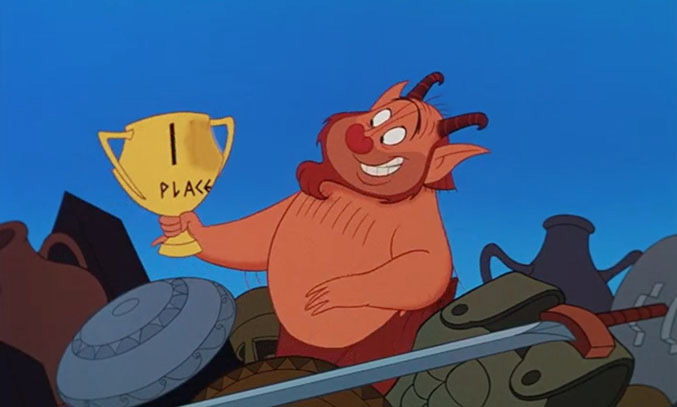
Sticking to the Disney theme I think my dream agent is more Mushu than Fairy Godmother.
I believe you need to find an agent...

Who gets your creativity


Who will be honest with you about your writing.
 
 
Who will get your stories seen by the right people.


They lend a hand when needed.
 
 
Who supports you when you feel down.


But most importantly they push you so you can reach your goals.


So just for fun, who in the Disney world would you want as an agent? Think about it...