Showing posts with label Writing Advice. Show all posts

Friday, May 3, 2019

So You Have a Book Coming Out: Part Four: Taxes and Deductions

Upfront Disclaimer: I'm not a tax pro or lawyer or anything other than a writer trying to stay organized. This way, I have the information to give to my tax professional.

You, as a published author or illustrator, are now a business. That means there is some not-so-fun things we have to deal with so we can keep writing and creating.

Taxes.

Let's face it. Laws change, the forms are about a million words long, and who knows what we may be missing if you don't have a certified accountant in the family.


I have a certified public accountant. I think they are worth the money, not only for the time it saves me, but the relief from stress and anxiety I have that I may mess something up and having the IRS show up Men In Black style.

+
Whether you are a do-it-yourself-er, or you use a pro, you need to be organized all year long. Not just those first two weeks of April.

You don't need a fancy or expensive program. I use excel.

First: Do you have a home office that is solely used for your business as a writer or illustrator?
If so, this may be tax deductible. That means this little piece of creative heaven may save you a bit on your dues to Uncle Sam. But you have to keep track of some things:

  • Your home's TOTAL square footage and the OFFICE square footage. 
  • Electric Bill
  • Internet Bill
  • Gas Bill
  • Phone Bill

Then a percentage of you home's bills are what is actually deductible, based on how much space it takes. You have to have the totals for each month. It is easier to keep track of this monthly, rather than digging through old bills, or hunting for your gas company user name and password right before the tax deadline.


You can also deduct business related expenses. Keep ALL receipts and label and organize them. If you get audited, you want everything available and easy to find. I'm talking file folders or binders as opposed to shoe boxes.


Items to track for possible deductions:

  • Copies of your books for sales, promotional giveaways, and donations
  • Mileage for School Visits 
  • Food and Hotels for out of town School Visits or Presentations
  • Writer or Illustrator Organization Annual Dues (i.e. SCBWI)
  • Classes for continuing your education
  • Promotional materials (stickers, bookmarks, pins)
  • Website fees
  • Author/Illustrator Professional Photos (again, falls under promotional materials)
  • Office Supplies
  • Art Supplies (for illustrators)
  • Necessary Office Equipment: Computer- yes! That mini golf putter thing and fancy espresso maker-no!
  • Donations (if you donate a copy of your book, track what you pay, not the retail value.)


There is probably more that I haven't thought of, but hey, I'm new at this.

I keep everything in an excel spreadsheet in summary as well as a sheet for all I am paid:

  • Advances
  • School Visit Fees
  • Speaking Engagements
  • Royalties


Again, this is NOT a comprehensive guide. This is just stuff I've figured out on my own this year as a debut author. If you have any questions about your specific circumstances, I recommend finding a local tax pro. Preferably before next April.

So get organized and then get back to writing.


Tuesday, April 23, 2019

Author Interview with Giveaway: Gayle Krause


Today we have picture book author Gayle Krause here to tell us about her new book, Daddy Can You See the Moon. Gayle has also been kind enough to offer a picture book critique to one lucky reader.  

Thank you, Gayle, for joining me on Reading, Writing, and Reaching for Chocolate!

Thank you for hosting me, June.

Every reader loves to know, what inspired this story?
As former Early Childhood Educator, I taught Children’s Literature to prospective teachers as part of their training program for over thirty years. I also directed a Laboratory Pre-K, affiliated with my teaching course, in Goshen, NY. It was there, as I sat on the floor of the nursery school, reading countless picture books to the preschoolers, or acting out fairy tales as creative dramatic presentations that I became uniquely attuned to the young child’s mind.

These precious little guys struggle to make sense of the world around them, especially the adult world of their parents. Emotional situations like divorce and deployment affect these children in a way that most adults cannot see.

It was one particular little boy that was having a very difficult time accepting the time frame of his dad’s separation from the family. That came back to me years later and the end result is DADDY, CAN YOU SEE THE MOON?

What is your process like?
As I mentioned above, I taught high school students and college freshman and also ran a Laboratory Pre-K. Consequently, after spending 30 years with these kids, I tend to write at both ends of the spectrum. Picture Books or Young Adult.

So my process might be a bit unconventional. After I spend two years or so working on a novel, I switch gears and create rhyming picture books. Why rhyming? Because essentially, I have a YA voice, and the rhymes help keep my word count low. Also, I enjoy the challenge of meter, beats, alliteration, and story in a rhyming format.

What do you hope readers take away from this story?

In this book, children from military families can see that they are not alone in this incredible, perplexing moment when Mom or Dad has to leave the family. And non-military children can also share the family bond and love that strengthens this little boy. The moon may wax and wane, but the special bond between a young boy and his father never wavers. Since April is recognized as The Month of the Military Child, I have teamed up with OUR MILITARY KIDS to help support children and families of deployed soldiers. 10% of all royalties will be donated to OUR MILITARY KIDS. www.ourmilitarykids.org


That is amazing! What else are you working on?
I am currently working on a MG Fantasy trilogy with a boy protagonist that goes on fantastic adventures in a parallel world.

What is your favorite chocolate or dessert?
My favorite dessert is a combination of both….a chocolate éclair

Thanks again for having me on your blog, June. If your readers would like to know more about my books they can find me at http://www.gayleckrause.com

GIVE AWAY: Gayle is giving one lucky reader a rhyming picture book critique. 
I’d like to offer a rhyming picture book critique of no more than 500 words to one of your followers. If they would kindly comment below and share this post on social media (including where they posted).

GIVE AWAY HAS ENDED (5-1-19) THANK YOU 

Thanks again for joining me on the blog and for your generous giveaway. Best of luck to all the readers. 

Happy Writing!

Thursday, April 4, 2019

So You Have a Book Coming Out: Part Three: Author/Illustrator Photos


Some people are naturally photogenic. No matter what they are doing or what they are wearing, every photo comes out like something in a magazine. I am not one of those people. I'm usually caught while talking with one eye half shut.


As a published author or illustrator, you are now a business. Your photo needs to convey a sense of professionalism as well as showing who you are. Writing thrillers? Maybe a dark and broody shot would work. Goofy humor? Colorful and full of light and laughter may portray you best.

If you can, hire a professional photographer. It is a business expense that you can write off at the end of the year. Or tell a loved one, all you want for your birthday is a 30 minute photo shoot.

Amateur Example: I took this photo with my really nice camera I bought on a Black Friday Deal a couple of years ago. We took like 30 shots and this is the only one I didn't hate.


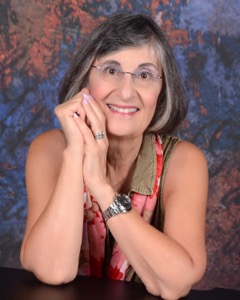
Professional Example:


I paid for a 30 minute session. We met at an old library. She took a bunch of shots, sent me about 15, and I seriously like all of them. With her lighting, superior equipment and artistic eye, she made me look younger and like I'd lost 15 pounds. She gave simple instruction like, "chin out a little more," or, "lean forward slightly," or, "That yellow background is washing you out. Lets move over here."

This looks professional, flattering, and the high resolution means it will maintain its quality even when resized. This is important since you'll be sending this file to interviews and author/illustrator visits.


A few tips: Tiny print on your clothes doesn't always translate well on camera.

Some poses feel awkward but look great on camera.

Stop to relax you face after holding the smile for so long.

Call around to photographers. I don't believe the one I worked with advertised a 30 minute session, but when I explained what I needed she said a full hour session was unnecessary. Although, she started having fun with some shots and we did go a little over our time, but she didn't charge me extra.

Also, HAVE FUN! For that photo session, you are the star.

Saturday, March 30, 2019

Publishing: The Good, The Bad, Your Perspective


You have a contract. Yay!


Plans and dates change…Crud.


My debut picture book was scheduled to publish on April 2nd. Due to some issues with the actual printer (no fault of the publishing house, machinery was being replaced) the date was pushed to the 16th and now to May 7th.

Luckily for me, the publisher is on top of things and we’ll still have books for all the events already scheduled.


As I told this news to friends and family, they got loud and frustrated on my behalf. But to all my authors and illustrators out there I have a word of advice.


Chill.

Sure, plans changing stinks, but my book is still coming out. Shaking my fist at the sky and cursing the book gods won’t get it printed any faster. Getting upset doesn’t fix anything (although at times it is easy and even stress relieving to stomp your feet and grumble).

Publishing will be full of delays and changes. At school visits there will be technical difficulties. There may be bookstore visits with only one customer or festivals that get rained out. Things happen and you need to know this going in.

Roll with the changes and mishaps as best you can.

Now I have the opportunity, for all of my April visits, to let people know they are getting an exclusive. They can see and purchase Odd Animal ABC’s a month before anyone else. So those children at the school visits get to feel special. Those bookstore shoppers get the jump on the rest of the world. That is pretty cool.

It is all a matter of perspective.

Sunday, February 3, 2019

So, you have a children’s book coming out…Part Two – Scheduling Author Visits


You did the work writing…editing…submitting...contracts…editing… and soon your book will be out in the world.

At less than two months before my book birthday I’m starting to work on visits to bookstores, schools, and libraries. But how do you set them up?

Well, you’ve already set up your online platform (even just a super basic website will do) so people can reach out to you. But you aren’t famous yet, so people probably aren’t knocking on your door.

Your publisher will probably make a flyer and/or give you marketing information or supplies. Those of you who are self-publishing
should make one, or have one made. 


It has all the information:

Who – Wrote and Illustrated – June Smalls and Claire Sedovic

What – Humorous picture book about animals and the alphabet.

When – Publication Date: 4-2-19

Where – Can it be purchased – Blue Manatee Press and IPG.

Don’t forget the cover art!

Publishers may also set up some of your author visits. But don't expect them to do all the work. You can and should help with marketing to make your book as successful as possible.

Start small and start local. Is there a local indie bookstore in your area? Walk in, introduce yourself, show your flyer, and offer to do a signing. Many indie stores even work with local schools and may know who nearby may be interested in visits.

What about your co-workers at your day job? Oh, one of them has a sister who teaches first grade? Sweet – get or give contact info. Networking like this can be organic. Work at your own pace and don’t overbook or overwork yourself.

Do you live near the schools you attended as a child? Do you have a child currently in schools with the right demographic for your book? Reach out, contact their teachers or the librarians. You may want to start with free or discounted rates until you are comfortable with your presentations and their value.

Know before you reach out what exactly you are offering. Are you just doing a reading and signing? Do you have a presentation suitable for a small class or a whole auditorium? Have you practiced and timed your presentation, leaving time for questions? Do you use a PowerPoint or props or have art to share?

We can break down what all your author visit can entail, but that is a post for another day.

Once you start a dialogue with your school or store contact, let them know what you need. Also, be prepared for technology to fail. Stuff happens and you may have to adapt.


Monday, January 21, 2019

So, you have a children’s book coming out…Part One: On Line Presence


My debut picture book, Odd Animal ABC's, comes out in just over two months. So what am I doing to prepare? Well, I’m learning as I go since there is no one perfect directive on how to sell a bajillion books. Here is what I’m learning about your Online Presence.


First things first:

People need to be able to find you and your books online. You don't need to be a part of every social media outlet ever created. I’m not part of all of these, and I’m not promoting any one in particular, but here are some to look into. Find what works for you or ones that don't need up-keep.

No matter what you choose to participate in on social media be sure it is appropriate for the age of your readers and professional. Agents and editors may read your posts once they are thinking of working with you. Kids may find them too as they are looking for your next book.


Amazon Author Page - See your sales, share info like tour events, blogs, etc.

Blog - A creative outlet and a way to connect with others. Blog as much as you want. There are many blog hosting sites to choose from. Topics? You can review books, interview peers, share cheesecake recipes and pictures of your pet. Content is up to you. 

Goodreads - You can have a verified Author Page. This takes just a few minutes to set up and maybe a day to become verified. You can interact here, but it isn't a requirement. You can review books, make a list of books you want to read, and track what you’ve already read.

Facebook - Highly interactive. You can chat, post pictures, host giveaways and more. Again, you should make sure this has content that you are comfortable with prospective publishing houses seeing. What works for someone who writes super edgy YA may be very different content than someone writing sweet and sentimental picture books. (This is also why some writers who span those two genres have a pen name for one or more of their genres.)

Instagram - Photos, videos, illustrations, and interaction, perfect for artist who want to connect.

Twitter - Short and sweet (tweet?). Each post only contains a max of 280 characters and/or a fun gif. A few minutes a day can keep you pretty active. There is a large writing community and hashtags to follow.

Website - Your website doesn't need to be elaborate or expensive. Clean, easy to navigate, with links for purchasing your books. If you plan to do school visits make sure there is a way for schools to reach out to you.

What About Branding?:

As a traditionally or self-published author, or illustrator, you are now a business. Consistent branding helps people recognize your work. Using your book cover as your avatar? What about using it across all your platforms. Your website name should be easy to figure out. www.YOURAUTHORNAME.com if possible. That way all the folks hunting on Google can find you with ease.


Debut Groups: Some writers team up with others in their genre that are debuting in the same year. These buddies cross promote through social media, interviews or guest posts on each other’s blogs, and they are there to stumble through the adventure with you.

Links: Don't forget to set up links so people can purchase your book. Like This: Order Now (yes, this is a shameless plug). Make it easy for buyers to access your book. 

Again, I’m not promoting any specific thing here. Maybe you just want a simple website and nothing more. That is OKAY.  Social media is a tool that can help with promoting. NOT a requirement. Don’t force yourself to spend time on social media if you hate it or if it becomes a burden and takes away from your creative time. 

You don’t need to try everything all at once. That could overwhelm you and take away any fun you may have had. Every writer and illustrator is different and finds what works for them over time. These aren’t the only social media site, there are more and, who knows, by the time I’m done writing this blog some new form of social media may have gone viral. Do what works for you and at your own pace.


Happy writing!

Saturday, December 29, 2018

Steal TIme


As 2018 comes to a close and people are talking about their 2019 resolutions, I'm seeing many people who talk about making time for their writing, or lamenting that things got too busy in 2018. I'm going to let you in on a secret. Your time is yours, and if you can't make time - you should steal it.

Little bits add up like drops of water to fill a glass.

Grab notebooks. One for your purse or backpack, one for your kitchen, one for your car. Don't forget that your phone is a handy tool.

When an idea for that perfect character name pops into your head, text it to yourself. Only takes 1 minute.

When you are sitting in your car at your kids practice waiting for them to find their other shoe - grab that notebook and jot down some plot points. Another 5 minutes stolen back for your writing.

Oh, are you trapped at the car place getting your oil changed? Where are the pens? Here is 20 minutes to work on dialogue between your two main characters.

Lunch break? 30 minutes to use your smart phone to research owls and jot down all of that gross stuff about pellets while eating at your favorite spot. (For the squeamish maybe swap pellet research with that oil change dialogue writing.)

Don't feel guilty when the family is fed and you say, "I'm going to go write for 20 or 30 minutes. Entertain yourselves." (This may be harder for those with super young kids, but do what you can)

There is also a 5 am writers club I see on Twitter. I won't lie - I'm not a morning person and probably won't ever do this one. But it may work for you! If 5 am doesn't work, what about waking up just 20 minutes early?

If your goal this year is to write more then go for it. Even if it is only 5 minutes or 10 minutes here or there. You don't have to write every single day if it doesn't work for you, but you do need to write. Writing is writing whether it is using a pencil, typing on a computer, or using your smart phone.

Don't forget to make time/steal time to read as well. It is market research that is vital to your trade.

Best of luck for a healthy, happy, and productive new year!

Monday, January 2, 2017

Happy New Year 2017


I'm here to say goodbye to 2016 and welcome 2017. 

This year I want all you writers to make realistic resolutions.

Write more.
Write without distractions.
Write without fear.
Write with your heart.
REVISE, REVISE, REVISE.
REVISE.

Yes, it is a lovely thought to say, "This year my resolution is to become a published author." Unless you are self publishing there are too many things out of your control.

This year I hope to polish, revise, write, research. All of which are in my control. Patience, focus, and drive are within my control. Dedication is within my control.

Don't beat yourselves up with things don't go to plan. This business is subjective and slow, which is difficult for us to grasp in a time of instant gratification. 

I wish everyone a productive new year. I wish you inspiration. I wish you peace.

Happy New Year! Happy Writing!


Monday, August 29, 2016

Concept to Completion: Agent

Agents are busy people who only make money once a book is sold. I had many kind and generous agents who have agreed to interviews for this blog. Unfortunately none were available in time for this series. (We'll be seeing them in the fall.)

Since I wanted to keep this in order for when future readers go through the entire series, this is going to be a placeholder for an interview.

I will say that having an agent opens doors that you may not be able to get through on your own.

Some publishing houses are closed to unsolicited manuscripts and without an agent you can only sub to them if you've met them at a class or conference.

Also, a good agent is going to be honest with you about if your manuscript is ready. They may even be editorial and assist you in getting your manuscript to the next level before sending it on submission.

An agent will also be more likely to get you better terms if/when you get an offer. They are familiar with contracts and clauses, advances, royalties, rights, publishing houses of every size, plus they become a supporter of your work in many ways.

When subbing to agents be mindful that this is a professional situation. Letters should be organized, proofread, and polite. If an agent gives you any feedback, even if they don't offer representation, please appreciate it. They don't get paid unless they are selling books, so if they take the time to give you a personal rejection, then you should take it as a compliment to your work. And I do believe it is a compliment.

If you are querying agents, I wish you the best of luck.

Coming Soon: An actual Agent Interview


Up Next:  Concept to Completion: Editor

Sunday, August 14, 2016

Concept to Completion: Author


Last week, I gave a brief overview of the many, many hands that carry a picture book from concept to completion. Now we are breaking down each step. Step one is the Author.
I’m happy to introduce Tammi Sauer, author of picture books including Mostly Monsterly, Nugget and Fang, and Mr. Duck Means Business (one that I LOVE, I might add. Great ending!)

 
Welcome to Reading, Writing, and Reaching for Chocolate, Tammi.

So when you get an idea, like Mary Had a Little Glam, how to you start your process?

I start brainstorming! With this manuscript, I compiled a list of vivid verbs and specific nouns that tied into my character. These words included “click-clacked,” “accessorize,” “boa,” and “flair.” Also, I knew I wanted this story to be set in a school, so I listed other familiar nursery rhyme characters such as Little Bo Peep, Jack and Jill, and the kids who lived in a shoe to be her classmates.

That list seems like a fantastic idea. Love the shout out to the other nursery rhyme favorites too! How did you get your agent? Slush pile, conference, contest, ran into her at the grocery store?

I am a slush pile success story! When I was looking for an agent, I researched the names of agents who wrote some of my favorite books. In addition, I knew I wanted to find an agent who had a great reputation, who only accepted works she was passionate about, who was a good communicator, and who offered editorial feedback. I found all that (and so much more!) in Laura Rennert. We’ve been together since 2005 and have sold 27 picture books along the way.

TWENTY SEVEN?! And that’s just as of today. Think about that readers, it all started in the slush pile. What is your process with your agent? Sending only polished manuscripts or spit balling ideas to see what she loves?

I send polished manuscripts.

What is it like for you when a book goes on submission?

Oh, this is one of my favorite parts of the process! I know that at any moment I could receive an email or a call with good news. I love the feeling of possibility.

I’d have a strong possibility of checking my email every five minutes. J What is the shortest and longest time you’ve spent on the manuscripts you’ve sold?

I actually wrote one of my books in a couple of hours. That sort of thing is RARE for me. Longest? Hmm. That would probably be Nugget & Fang. I had written a few early drafts and thought the manuscript was okay. But okay isn’t good enough. I knew the manuscript just wasn’t there. So I closed the file and forgot about it. It was nearly two years later when, with the help of my critique group, I figured out how to make it work. It ended up selling at auction.

Once sold, who at the publishing house do you deal with and in what capacity?

Primarily, I deal with my editor. Sometimes an editor has suggestions for improvement. Sometimes an editor involves me in finding the right illustrator. Most of the time the editor asks for my input on the sketches and the first proofs.

Any advice for the aspiring picture book author?

When it comes to being a part of a critique group, find people who are at least as good as—if not better!!!!—than you are.  It’s nice to have people tell you how much they love your manuscript, but that doesn’t help you to improve. You want people who push you to make things stronger.

Preaching to the choir here. Good critique partners are coaches, teammates, and fans all rolled into one group and help you become a better writer. * What are you working on now?

Eek. I don’t like to talk about my current projects, but I will tell you that Your Alien Returns (Sterling, 2016), Caring for Your Lion (Sterling, 2017), and Truck, Truck Goose(HarperCollins, 2017) are my next three titles.

In my eyes, marketing your new releases count as current work. We won’t peak behind the curtain on the WIPS. So what fuels your creativity? Chocolate, caffeine, music, cake?

Oh, I love all of those things.

In addition, Tara Lazar’s PiBoIdMo (Picture Book Idea Month) provides a lot of fuel. Each November, Tara hosts dozens of writers and illustrators who offer posts on how they get their ideas. These posts are filled with wonderful suggestions. PiBoIdMo also challenges writers to come up with 30 ideas for potential manuscripts. I’ve been a part of PiBoIdMo since the beginning. Each time, at least one of those 30 ideas has led to a book.

Another great creativity boost is Linda Ashman’s Nuts & Bolts Guide to Writing Picture Books. This resource is a goldmine of information, interviews, and exercises. One of the exercises suggested writing a fresh take on a familiar song or rhyme such as “Twinkle, Twinkle Little Star” or “Mary Had a Little Lamb.” Out of nowhere, the words MARY HAD A LITTLE GLAM popped into my head. I knew I had to write Mary’s story.

Each time, at least one of those 30 ideas has led to a book.


I am a PiBoIdMo participant and winner too.  Readers, you can find PiBoIdMo here.

Thank you again Tammi for joining us here today. Best of luck with your upcoming releases. I can’t wait to see what you come up with next.

For more about Tammi check out her website http://www.tammisauer.com/home.html .

*Step two in the process of concept to completion is Critique Partners/Groups. I personally don’t see this as optional, but others may disagree. If you are looking for a critique group I suggest starting with SCBWI or any other groups you are associated with. Many have critique group match makers or online forums where you can find those who write in your genre, age group, rhyme vs. prose, etc.

Critiquing others work will also help you see what works and what doesn’t. So by helping others you are also helping yourself.

Join us next time for Concept to Completion: Agent
 
Current Hand Count: 1 author + Critique partners = approx. 5-10
Time: Hours to Years

Sunday, August 7, 2016

From Concept to Completion: How Many Hands Touch a Picture Book on the Publishing Journey?


When publishing traditionally, just what goes on getting your picture book out there?


You-Publisher-Consumer

Right?

Not quite.

During a talk with an editor recently, I asked just how many hands are on a picture book from concept and writing to completion and in the hands of the reader.  Here’s what I found out.

·         Author – This is the easy part. The creator of the manuscript. Sometimes this person is also the illustrator, but for this series we are looking at text only manuscripts.

**Hand count: 1**


·         Critique Partners/Beta Readers – Seriously-this should be a step. Find a critique group online or through groups like SCBWI. They can help you find what is working and what is not. They will push you to be a better writer. They will help you know when it is finally time to submit.

**Hand count: approx. 5-10 **


·         Agent – Not always necessary but I feel this is important to open doors and help you get your work extra polished before presenting it too publishers. Plus many publishers are closed to unsolicited submissions so you almost always need an agent to get into these houses.

**Hand count: 6-11**


·         Editor – Your agent, or yourself, will submit to an editor. If they love your story and see promise they will present it to their boss (or acquisitions team).

o   Inside the publishing house now: the Editor’s boss (or acquisitions team) will need to give the thumbs up to acquire the piece.

**Hand count: 7-12**


·         You and Editor – There will be back and forth during the editorial process. This may be a few simple changes and corrections or there may be a number of big changes. Each book is different.


·         Copy Editing –focuses on accuracy, formatting, and proofreading. Line edits people.

**Hand count: 8-13**


·         Design/Art Director – The art director does exactly that. They find and guide the artist in the direction to achieve the right ‘feeling’ for a book. They work with the editor and discuss what illustrators they think are right for the project. They are not just a stop on this chain of hands on you book, but more of a cog that is moving along with many other. They work with the editor, illustrator. Sometimes this is a team and not just an individual.

**Hand count: 9-16**


·         Illustrator – The partner that you may never even meet or talk to. This person will create concept drawings, work with the Design Dept/Art Director. After weeks, months, or occasionally years they will create the art that brings the text to life.

**Hand count: 10-17**


·         Production Editor- Production editors manage the publication. They deal with writers, editors, and vendors to ensure your picture book meet the house’s standards and that everyone meets deadlines. Sometimes these editors also proofread and edit the manuscript and offer feedback to writers and the other editors. (Notice ALL the editing to make sure your picture book is as perfect as can be?)

**Hand count: 11-18**


·         Sales – These are the people actively selling your finished book to vendors. Again not just an individual, but a team.

**Hand count: 12-21**


·         Publicity – These are the folks who create awareness for your book, gaining attention and interest.

**Hand count: 13-24**


·         Marketing – These folks, like with Publicity, create awareness and help sell the book. In some houses the Publicity and Marketing are one in the same.

**Hand count: 14-27**


·         Sub-rights- These are "sub-license" your picture book for various formats and adaptations in addition to the primary format. Additional sales could be film or television rights or translation to another language.

**Hand count: 15-28**


·         Book Sellers and Libraries – Such as Barnes & Noble, Amazon, and Indy Bookstores. The places we know and love.

**Hand count: 20-way too high of a number for me to even guess.**


·         Reader – Finally. This quick and simple process can take around 2 years on average and, depending on the size of the publishing house you are working with, you can easily have up to 20-30 people who have their hands on your precious manuscript to get it out into the world.

Traditional publishing takes a real team to get a book from concept to completion.  Over the next weeks I’m tracking down people in these fields to get interviews so we can see what goes on behind the scenes when making a picture book.


People in the publishing field, let me know if I skipped any jobs.

Please note all of my counts are approximations. These numbers can vary greatly depending on the size of the publishing houses.


Saturday, November 7, 2015

Week One of PIBOIDMO 2015

So one week has passed in PiBoIdMo. I have seven shiny new picture book ideas, right?


No, actually. And that is weird for me. Most of the time I am an idea machine. Usually it is the sitting down with a hammer and smashing my idea to bits so that I can reconfigure it into a masterpiece that is the hard part.


I have three ideas so I'm not to far behind. That doesn't mean I'm not working.  Critiques are happening, both for me and by me, classes, and editing current works for picture books and my chapter book WIP.

So hang in there other PiBoIdMo writers. If the idea's aren't flowing today then write or edit something else. Maybe even try a different style. If you normally write on the computer try picking up a pencil and paper. Stay busy and just maybe an idea will .... holy crap I just had an idea while writing this.  OFF TO THE IDEA NOTEBOOK...

What? Were you expecting something fancy? Go get to writing! The notebook paper awaits.